
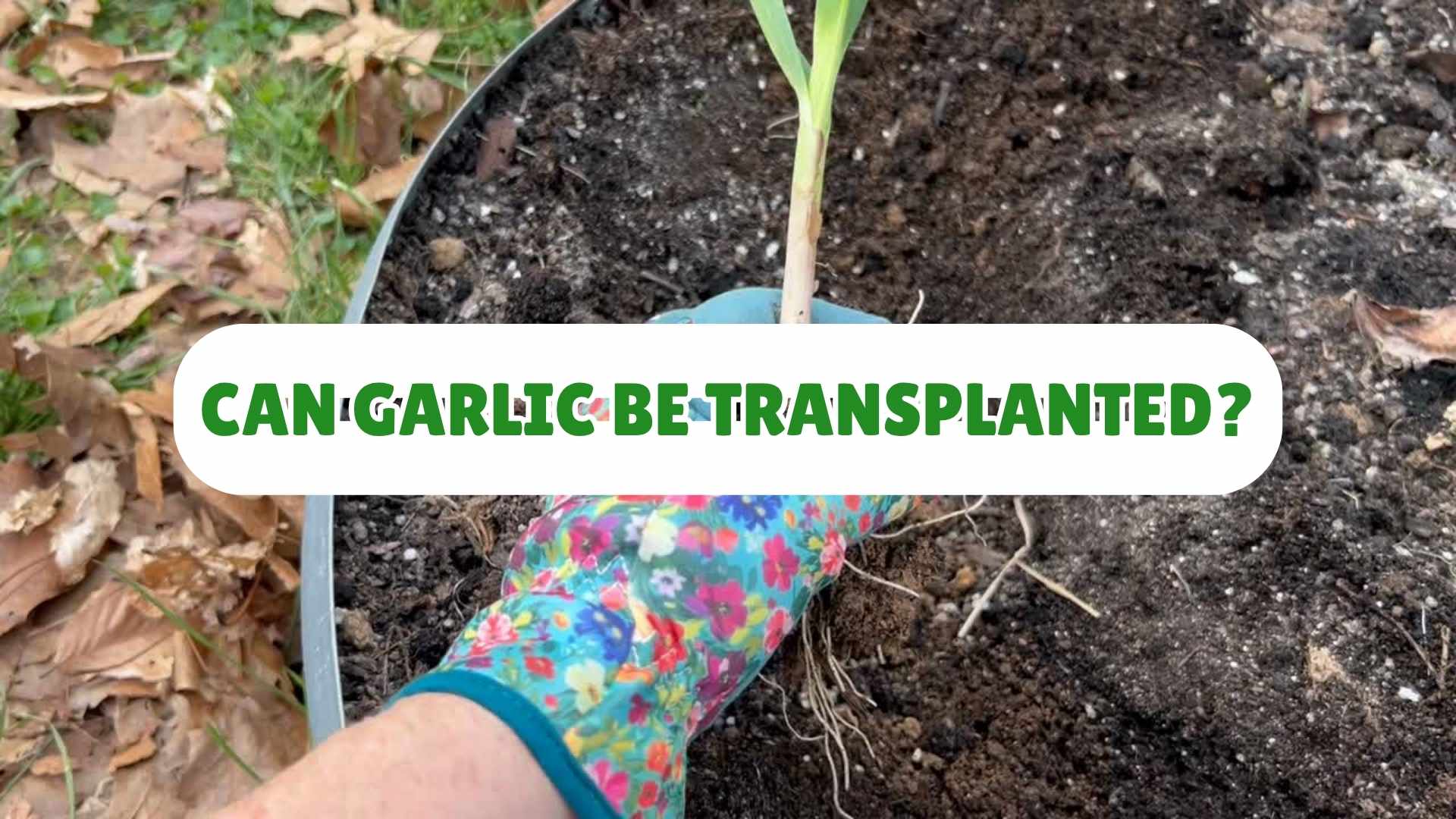
I planted garlic last fall and had a whole plan for it. Then the plan changed — and I had to transplant the sprouted garlic out of its bed at the end of March 2026. That timing mattered for the garlic too. That’s the kind of thing that happens on a homestead!
UPDATED: Results are in!
This post is about why I moved it, what pre-sprouted garlic looks like, how I transplanted it, and where it went. I’ll update it as the garlic grows — because honestly, I want to know how this turns out too.
From my homestead: This wasn’t on the list. The garlic was already in the ground and already sprouting when I found out I needed that space for something else entirely. If you’ve ever had to pivot mid-garden-plan, you know the feeling.
This post contains affiliate links. If you purchase through my links I may earn a small commission at no extra cost to you. I only share products I actually use in my own garden.
Why I Had to Transplant Sprouted Garlic (The Polytunnel Surprise)
Here’s what happened: my garlic was planted in a mound bed, it was already sprouting, and then I found out a polytunnel was going in. The mound bed was exactly where the polytunnel needed to go.
So I had a choice — leave the garlic and hope for the best, or move it now before the roots got any more established. I moved it.
Pre-sprouted garlic is actually more fragile than cloves that haven’t started growing yet, so I knew I needed to be careful. But it can be done — and I’ve got the video to prove it
What Pre-Sprouted Garlic Looks Like
If you’ve never dug up garlic that’s already started growing, here’s what to expect: the clove will have a small green shoot coming up from the top and the beginning of a root system reaching down below.
The shoot is delicate. The roots are short but they’re there. This is why moving garlic at this stage requires some care — you’re not just relocating a dormant clove, you’re moving something that’s already got momentum.

From my homestead: Mine were a few inches along already. Not huge, but definitely committed to growing. I tried to keep as much root intact as possible when I dug them up.
How I Transplanted the Garlic
Here’s what I did, step by step:
- Dug each clove up carefully, working around the base to avoid snapping the roots
- Kept the cloves together and moved quickly so they weren’t out of the ground long
- Amended the new bed before planting (more on that below)
- Replanted at the same depth they’d been growing — about 2 inches, with the pointed end up
- Watered them in gently and mulched over the top
The goal was to disturb them as little as possible while getting them settled into their new spot. (see youtube video above until i get pictures posted)
Where the Garlic Went — The Raspberry Bed
I moved the garlic into my raspberry bed. That was partly practical (it had good soil and space), and partly a happy accident of good companion planting.
Garlic and raspberries are actually excellent neighbors. Garlic is a natural pest deterrent, and the strong scent helps keep aphids and other insects away from the raspberry canes. The garlic will be harvested before the raspberries need that space in summer — so the timing works out perfectly
From my homestead: I didn’t plan for garlic in the raspberry bed. But sometimes the garden makes decisions for you — and this turned out to be a good one. You can follow my whole raspberry journey here → Growing Raspberries in Kentucky
What I Amended the Soil With
Before I put the garlic in, I amended the raspberry bed. Garlic likes well-draining, fertile soil with a slightly acidic to neutral pH — similar to what raspberries want, which made this easy.
Here’s what I added:
- I had already amended the raspberry bed with compost
- I mixed in a 4-6-3 orgainc fertilizer because it is what I had on hand
The goal was to give the garlic the best possible start after the stress of being transplanted.
Transplanted GARLIC UPDATE
I Thought It Was a Waste — Then I Dug One Up.
July 2026 brought the week of rain. It brought doubt into my garden. I was so disappointed when I looked at the garlic leaves all laid on the soil and looking like it failed. I almost walked away. Then I thought I’ll just dig one and see how bad it really is.

Look at that garlic! It survived! I lost 4 or 5 of the transplants but it actually worked! It was a lot of effort and keeping up on watering, but the raised beds, compost, mesh cover, and mulch did the trick. Success!
FAQ — Transplanting Garlic in Kentucky
It’s not ideal, but it can be done. The key is moving quickly, keeping roots intact, and getting the cloves back into the ground without letting them dry out. Pre-sprouted garlic is more fragile than dormant cloves, so handle it gently.
Yes — transplanted sprouted garlic still produces, here’s the bulb I harvested
Yes. Kentucky’s climate — cold winters, warm springs, good rainfall — is well-suited to garlic.
I’ll Keep You Posted 🧄
This is one of those garden moments where you just do your best and watch what happens. The garlic is in the ground, in good soil, with good companions. Now we wait.
I’ll update this post as the season continues — when I see new growth, when the polytunnel goes up, and when it’s time to harvest. If you’re growing garlic in Kentucky too, I’d love to hear how yours is going.
You can follow along on Youtube or sign up below.
Resources & Further Reading
- University of Kentucky Cooperative Extension — Growing Garlic
- University of Kentucky Cooperative Extension — Kentucky Garden Calendar planeatmove.com/kentucky-garden-calendar
Leave a Reply