
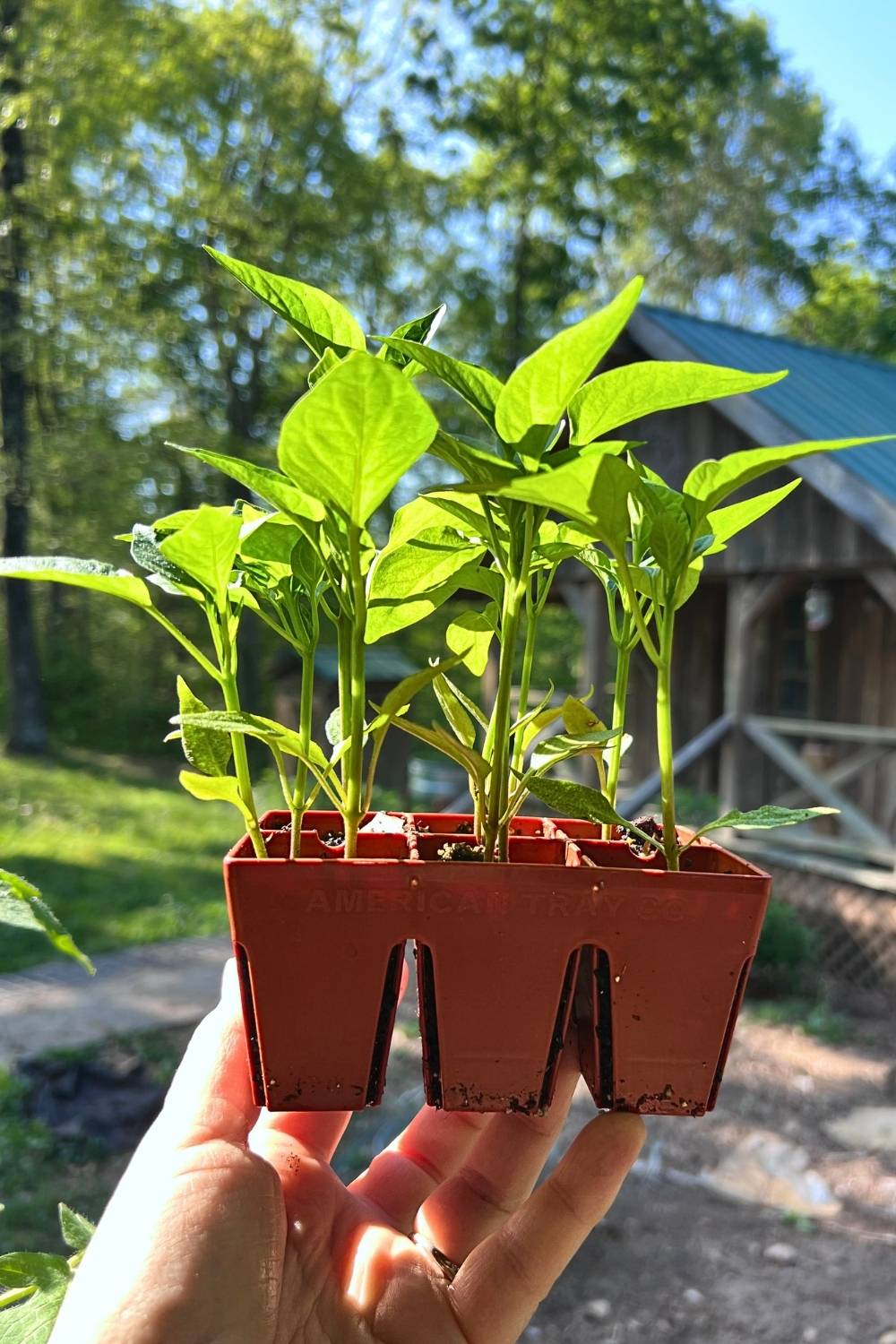

If you’re searching for when to plant peppers in Kentucky, you’re in the right place. I was not a hot pepper person until I learned to stuff them, wrap ’em in bacon, and grill them on the BBQ. But mainly, I grow them because my husband and son love the hot sauce I make. Growing my own peppers gives me a little bit of control over what goes into our food. There are so many types of peppers that they are worth growing, even if heat isn’t your thing either.
Here’s my honest 2026 pepper story before we even get to timing: I used old jalapeño seeds this year. They didn’t take off. Meanwhile, my cayenne, gourmet pepper, and pepperoncini seeds — all fresh — germinated fast and grew strong. Lesson learned, and now I’m telling you so you don’t repeat it.
Buy fresh seeds from a reliable source. I have since learned that 5-year-old seeds have lower germination rates and weaker seedlings even when they do sprout. I picked up pepper seeds from Epic Gardening this year for my other varieties, and the difference was obvious. Jalepanoes, one sprouted, my other peppers 2-4 sprouted per cell. For the jalapeños, I ended up finding starts at my local Amish nursery in mid-April — which is actually a perfectly reasonable backup plan and worth knowing about. I love the community I have come into here in Kentucky, I can always ask questions about how their starts and plants are grown.
This post contains affiliate links. If you purchase through my links I may earn a small commission at no extra cost to you. I only share products I actually use in my own garden.
The Quick Answer: When to Plant Peppers in Kentucky
Start seeds indoors: Mid-February to mid-March (8–10 weeks before transplant date)
Transplant outdoors: After last frost, soil at least 60°F, nights consistently above 55°F
Safe transplant date Kentucky: Around May 15 statewide — earlier in Western KY, later in Eastern KY – Scroll down to see dates by region.
Read on to see tips and what peppers grow best in Kentucky
Peppers are the most cold-sensitive warm-season crop in a Kentucky garden. I posted a YouTube short about moving my peppers inside because it was going to be 40 degrees outside. Others piped up and said that they agreed that under 50 stunts their growth. They need the extra time, so I will follow the suggestion and not plant out until at least May 15 for my region.
When to Plant Peppers in Kentucky — By Region
According to the University of Kentucky Cooperative Extension (NEP-221), safe planting dates for peppers in Kentucky begin around May 15 statewide. Here’s the regional breakdown:
| Region | Start Seeds Indoors | Transplant Outdoors | Notes |
| Western KY (Zone 7a–7b) | Mid-February | Early–Mid May | Earliest window in the state |
| Central KY (Zone 6b–7a) | Late Feb – Early March | May 15 | Derby Day is your safe minimum |
| Eastern KY (Zone 6b) | Early–Mid March | Late May | Higher elevation = later spring |
Soil should be at least 60°F and nights consistently above 55°F before anything goes in the ground. A cold night after transplanting won’t kill peppers outright but will stress them badly and set back your harvest by weeks.
🌱 Planting more than peppers in May? See my What to Plant in Kentucky in May interactive Calendar
Not sure which region you’re in? My Kentucky Vegetable Planting Calendar lets you toggle between all three zones.
Want to know when to plant more in Kentucky?
Get my FREE Kentucky Vegetable Planting Calendar with zone-specific dates for peppers and 30+ other vegetables. Perfect for planning your whole season!
Why You Need to Start Peppers Earlier Than You Think
Peppers are slow. They take 6-8 weeks minimum (some hot varieties longer) from seed to a transplant-ready seedling. If you’re in Central Kentucky with a May 15 transplant date, count back 6-8 weeks. That puts your seed starting date at early to mid-March at the latest — and mid-February if you want bigger, more established plants going in the ground.
🌱 In my impatience to see those little sprouts pop up, I learned some hot peppers take even longer than sweet peppers. Jalapeños are relatively quick in the hot pepper world. If you’re growing habaneros, ghost peppers, or anything in that range, just breathe and wait for those little sprouts to emerge.
🌱 And use fresh seeds. I cannot say this enough after this spring. Old seeds sitting in a drawer from years ago will germinate slowly, unevenly, or not at all. My old jalapeño seeds were a reminder of what a difference seed quality makes. My cayenne, gourmet pepper, and pepperoncini from fresh sources? Up and growing strong.
Fresh pepper seeds from Epic Gardening →
Starting Pepper Seeds Indoors in Kentucky
My indoor setup:
- Epic 4-Cell Seed Starting Trays — peppers need more root space than a standard 6-cell at the seedling stage ( I started with the 6 cell, but recommend the 4 now that I know better)
- Epic Heat Mat — not optional for peppers. They want 80–85°F soil to germinate. Without it, germination is slow and patchy.
- Epic Humidity Dome — keeps moisture consistent during the long germination window.
- Epic 5″ Cube Pot — if your peppers outgrow their starter cells before it’s warm enough to transplant outside, pot up here. Very likely with an early start
Plant 2 seeds per cell, about ¼ inch deep — shallower than tomatoes. Once seedlings emerge, remove the dome and get them under a grow light immediately. Leggy pepper seedlings from insufficient light are one of the most common first-year mistakes and they never fully recover.
What If You Missed the Seed Starting Window?
Buy transplants. Seriously — this is not a failure, it’s a great backup plan and a great way to try a new pepper.
I ended up at my local Amish nursery in mid-April this year, picking up jalapeño starts because my old seeds didn’t perform. I may have gotten some new herbs to try, too! They had healthy, well-grown transplants ready to go, and I trust their growing methods. They will be hardened off with my other seedlings and ready to be transplanted on my timeline.
Where to find pepper transplants in Kentucky:
- Local Amish nurseries — often the best quality and most interesting varieties in rural Kentucky
- Your county Extension office sometimes hosts plant sales in spring
- Local farmers markets in May
- Independent garden centers — avoid big box pepper transplants if you can, the variety selection is limited and plants are often rootbound
- Facebook Market Place – get to know your grower and what they use for seed mix and or sprays.
The goal is to have peppers in your garden. How they got there is a journey, not a failure.
What NOT to Do with Peppers in Kentucky
Don’t plant peppers too early — I know the temptation, but:
❌ **Don’t transplant before May 15** (Central KY) — one cold night stunts them for weeks
❌ **Don’t use old seeds** — my jalapeños taught me this the hard way
❌ **Don’t skip the heat mat** — peppers need 80-85°F soil to germinate
❌ **Don’t crowd them** — they need more space than you think
❌ **Don’t let them get leggy** — insufficient light = weak plants that never recover.
Wait for warm soil. Use fresh seeds. Be patient. Your peppers will thank you
My Jalapeño Story — the Accidental Trellis Win
In 2025 my jalapeño plants ended up tucked in under the low end of my low cattle panel cucumber trellis — not as a strategy, just because that’s where they fit. It turned out to be one of the best things that happened to them.
The trellis gave them something to lean against and tie up to so they didn’t fall over under the weight of fruit. The cucumber vines above provided just enough afternoon shade to buffer the worst of Kentucky’s July heat, which peppers actually appreciate — they’ll drop blossoms when temps consistently hit 90°F+, and the leaves might sunscald. And the whole setup in the raised bed gave them the drainage and soil warmth they love.

They produced peppers from midsummer straight through to October, when freezing temps finally shut them down. I was still picking in October and popping them whole in the freezer for later use.
If you’re growing peppers in a raised bed alongside cucumbers — consider tucking them in at the edges of the trellis. It worked better than I planned.
The full trellis and raised bed setup is in my How to Grow Cucumbers in Kentucky post.
Peppers That Do Well in Kentucky (What I’m Growing)
Kentucky’s long, hot, humid summers are actually great pepper conditions once the plants are established. Here’s what I’m growing this year and what I’ve learned works well:
Jalapeños — my go-to for the family. Productive, reliable, and versatile. Use them fresh, make hot sauce, stuff and grill them. This was my old seed failure this year, but I found great starts at my local Amish nursery. The UK Extension specifically recommends Emerald Fire variety for Kentucky.

Cayenne — my 2026 seedlings took off immediately from fresh seed. Fast grower, prolific producer, and useful dried or fresh for cooking. These are going into my hot sauce blend.
Pepperoncini — mild, Italian-style pepper that’s great pickled. Mine germinated well this year from fresh seed, and they’re a good option if you want peppers without the heat. My husband loves these pickled on sandwiches and wraps.
Gourmet/Sweet peppers — I’m trying a few sweet pepper varieties this year. The UK Extension recommends Aristotle, Karisma, and Valencia for Kentucky. Sweet peppers take longer to fully color up (green to red) but the flavor at full maturity is worth the wait.

Poblano — According to Sandia Seed Company, these can take a while to germinate. I’m going to have to find local transplants for these! They’re a big plant that needs space, but they handle Kentucky heat well once established.
Other varieties that do well in Kentucky (according to UK Extension Publication NEP-221): Bell Boy, King Arthur, and Revolution for sweet peppers, and Serrano and Hungarian Wax for hot varieties.
You can find a good selection of pepper seeds through Epic Gardening — I learned this year that fresh seeds from a good source make a real difference.
Can You Grow Peppers in Containers in Kentucky?
Yes — and they do surprisingly well. The UK Extension notes that peppers do well in large pots, which makes them a good option if your garden space is limited.
A 5-gallon bucket or container is the minimum for one pepper plant. Drill drainage holes in the bottom if using a bucket. Use a good quality potting mix — not garden soil, which compacts in containers. Containers dry out faster than garden beds in Kentucky’s summer heat, so consistent watering matters more.
If you have time, I highly recommend you looking up Gardening with Leon on Youtube. The self-wicking tubs are a lifesaver for budget, space, and time. Plus, he’s a cool older gentleman from Oklahoma and just fun to watch and learn from.
The advantage of containers: you can move them. If a late frost threatens after you’ve transplanted, bring them inside. If they’re getting too much afternoon sun in peak July heat, shift them to a spot with afternoon shade. That flexibility is worth something in Kentucky’s unpredictable springs.
Can You Plant Tomatoes and Peppers Together?
This comes up constantly and the honest answer is yes, you can — they’re not incompatible. Both are nightshade family plants with similar needs: full sun, warm soil, consistent water. The concern is usually about airflow and disease pressure, and the fight over nutrients. See my Best Tomatoes for Kentucky.
The real issues are spacing and enough nutrients to go around. Both crops need room and are heavy feeders. Crowding them in Kentucky’s humid summers invites disease and pests. Give each plant proper space regardless of what’s nearby. I grew peppers right under cucumbers last year with no problems — the right spacing and airflow matter more than which plants are next to each other. Peppers will need more space than you think.
For more on companion planting in a Kentucky garden: Kentucky Companion Planting Guide
Frequently Asked Questions About When to Plant Peppers in Kentucky
Cold soil and cold nights stunt pepper growth badly. Even if they don’t die, they’ll sit there doing nothing for weeks and may never fully recover. I’ve seen peppers set back 3-4 weeks from one 40°F night. Wait for consistent 55°F+ nights and 60°F+ soil — your patience will be rewarded with healthier, more productive plants
Around May 15 for most of Kentucky. Western KY can push to early May in a warm spring. Eastern KY should wait until late May. Always check that nighttime temps are consistently above 55°F — that matters more than the calendar date.
One plant per 5-gallon bucket — peppers need the full root space. Drill drainage holes, use quality potting mix, and water more frequently than you would in-ground plants. A 5-gallon bucket in Kentucky July sun can dry out fast.
You can — Both are nightshade family plants with similar needs, and they coexist fine with proper spacing and consistent watering and fertilizing, since they both want the same nutrients. The concern about disease spread is real but applies to crowding and poor airflow, not the pairing itself. Focus on spacing and airflow regardless of what’s planted nearby.
Peppers are done by October — first frost ends them. October in Kentucky is garlic planting time (for next summer’s harvest) and the tail end of fall greens season. Spinach, kale, and lettuce planted in September can still be harvested into October and sometimes beyond with row cover protection. See my planting calendar for more info.
Not for an outdoor harvest. You could start them indoors under lights in October for very early indoor growing, but they’d need to overwinter inside — peppers are perennials in frost-free climates but annuals in Kentucky. It’s not practical for most home gardeners.
What peppers will you be planting?
Comment below with what peppers you will be planting, I’d love to compare notes!
Resources:
- University of Kentucky Cooperative Extension — NEP-221: Growing Your Own Peppers: Planting dates, variety recommendations, spacing, harvesting guidance
- University of Kentucky Cooperative Extension — ID-128: Home Vegetable Gardening in Kentucky: General Kentucky planting guidance and pest management
- Epic Gardening — How to Germinate Pepper Seeds Faster: Germination temperature and indoor seed starting guidance
- Sandia Seed Company — Do Some Peppers Take Longer to Germinate?: Hot pepper germination timing differences by variety
- Sandia Seed Company — How to Germinate Pepper Seeds Fast: Optimal soil germination temperature (80–85°F)
- Blue Ridge Pepper Patch — Quick Plant Peppers in a 5 Gallon Bucket: Container growing guidance, drainage, and soil recommendations
Leave a Reply