
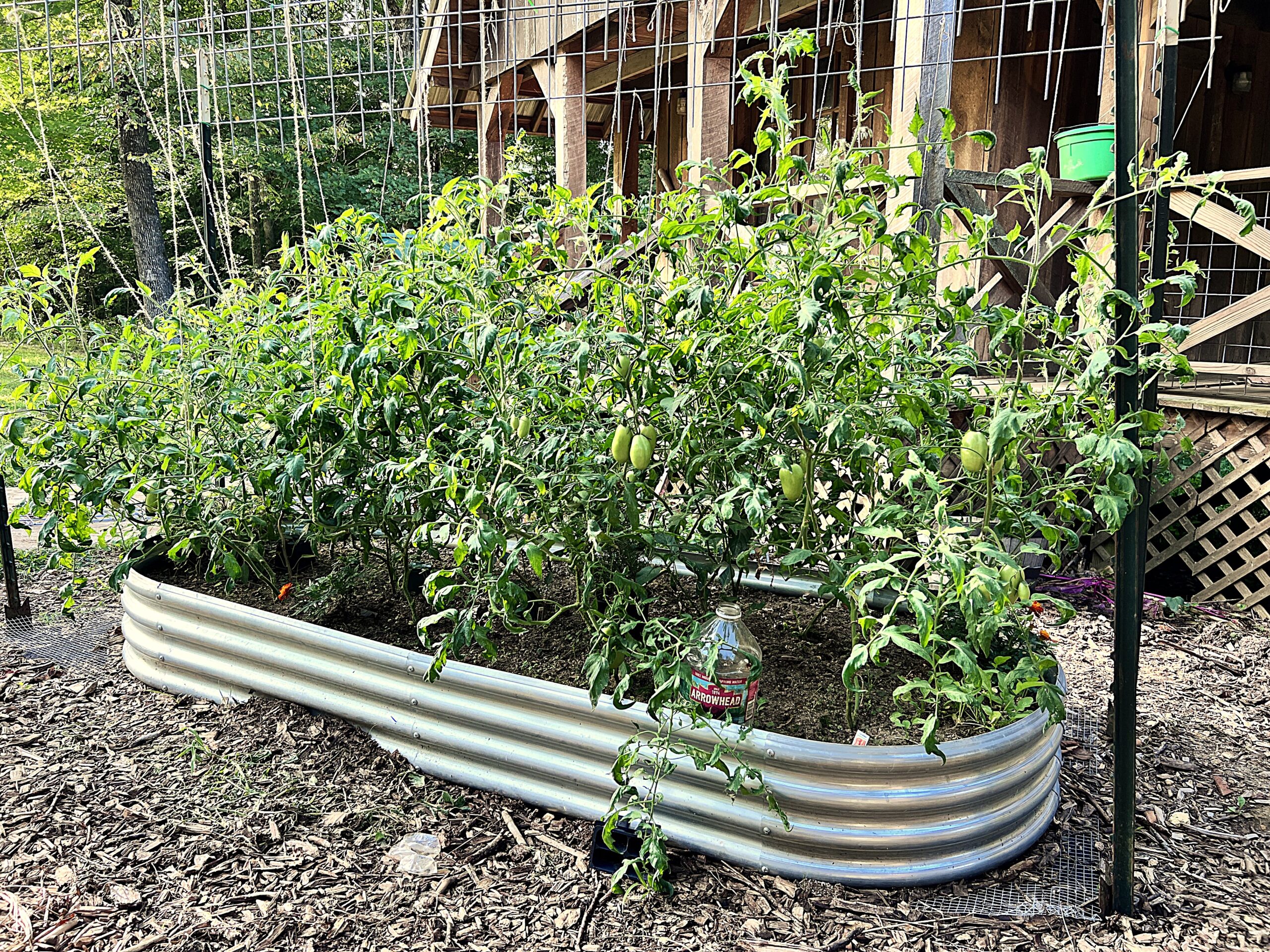
After two seasons of growing tomatoes in Adair County’s clay soil and unpredictable Kentucky weather, I’ve learned which varieties actually thrive here—and which ones split open the moment a thunderstorm rolls through. Finding the best tomatoes to grow in Kentucky isn’t just about picking popular names from a seed catalog; it’s about choosing varieties that can handle our heavy spring rains, humid summers, and the dreaded early blight that loves our climate. Whether you’re planting in raised metal beds or amending clay soil in-ground, this guide covers the tomatoes that actually produce in Zone 7—plus the lessons I learned the hard way so you don’t have to.

Quick Answer: When to plant tomatoes in Kentucky
Plant tomatoes outdoors in Kentucky after your last frost (May still need frost protection) — As soon as late April in Western Ky, May 5 for Central Ky, and May 15 for Eastern KY . Start seeds indoors 4-6 weeks before that date.
When to Plant Tomatoes in Kentucky (By Region and Frost Date)
I love starting tomatoes from seed! In my opinion, it’s the best way to try different varieties without spending a fortune on transplants. Plus, there’s something incredibly satisfying about growing a plant from a tiny seed all the way to a fruit-laden vine.
Check your specific last frost date at your local Kentucky Extension office.
Worried about that green thumb being brown? No worries, there are lots of nurseries that grow tomato starts for you. The down size is you don’t get as much variety to choose from.
Starting Seeds Indoors
Timing: Start seeds 4-6 weeks before your transplant date
Ideal germination temperature: 70-90°F (a heat mat helps tremendously)
What you’ll need:
- Seed starting trays with drainage and excellent airflow for strong roots Epic Gardening Seed Trays
- Quality seed starting mix (not garden soil!)
- Grow lights or a sunny south-facing window
- Tomato seeds in varieties you want to grow Epic Gardening Seeds
Transplanting Tomatoes Outdoors: Timing by Region
Based on University of Kentucky Extension recommendations, here are the safe planting windows for Tomatoes:
| Region | Earliest Transplant Date with frost protection | Latest Transplant Date for quick maturing varieties |
|---|---|---|
| Western KY | April 20 | June 15 |
| Central KY (Adair County) | May 5 | July 1 |
| Eastern KY | May 15 | July 15 |
Key rule: Transplant when air temperature is consistently 45°F or warmer at night, usually 1-2 weeks after your average last frost date. Soil temperature should be at least 60°F.

Understanding Kentucky’s Growing Conditions
Kentucky isn’t just one growing zone—we’re a patchwork of microclimates that can change everything about how your tomatoes perform. The USDA recently updated their hardiness zones, and while most of Kentucky falls into Zones 6b and 7a, your specific microclimate matters more than the map. See where your zone is

Check your exact zone at the USDA Plant Hardiness Zone Map
Why Your Kentucky Microclimate Matters
Kentucky’s ridges, hollers, elevation changes, shade patterns, wind exposure, and proximity to water all create unique growing conditions. My garden sits at the top of our ridge, and if it were positioned just 10 feet further south, it would be covered in shade at certain times of the day. That shade difference? It completely changed how my Cherokee Purple tomatoes performed.
💡 Pro Tip: You can check your elevation on Google Earth. This affects your frost dates and how much sun exposure you’ll get throughout the season. Tomatoes love heat and sunshine—it’s absolutely key to getting a good harvest.
My Cherokee Purple in my shaded kitchen garden didn’t produce nearly as well as the ones up in my sunny top garden. The lesson? Sun exposure is everything for tomatoes.
Heavy Rainfall: Kentucky’s Biggest Tomato Challenge
If you love heirloom tomatoes like Cherokee Purple (and trust me, the flavor is worth it), Kentucky’s heavy rainfall is going to test you. I’ve dealt with tomato cracking, powdery mildew, and plants literally breaking under the weight of rain-soaked leaves.

The combination of dry spells followed by torrential downpours causes tomatoes—especially thin-skinned heirlooms—to split right when they’re almost ripe. Later in this guide, I’ll show you how I’m solving this problem with simple rain covers over my Tomato Trellis.
Clay Soil: The Reality of Gardening in Kentucky
You might get lucky and have some nice sandy loam, but my entire property is heavy clay. The good news? Clay soil is absolutely workable for tomatoes, and your garden, with the right preparation.

I combat clay soil two ways:
- Raised beds – My Raised Beds give me complete control over soil quality
- Amending with compost – In my first year growing in-ground, I worked in my own compost and the tomatoes grew wonderfully (though I wish I had mulched more—lesson learned!)
Common Tomato Diseases in Kentucky
Kentucky’s humid climate creates the perfect breeding ground for tomato diseases. Here are the ones you’ll battle most:
| Disease | What It Looks Like | Prevention |
|---|---|---|
| Early Blight | Dark spots with concentric rings on lower leaves; most common in 60-80°F temps with rain | Mulch heavily, space plants well, avoid overhead watering, use trellises for airflow |
| Powdery Mildew | White powdery coating on leaves | Proper spacing, good air circulation, prune lower leaves |
| Septoria Leaf Spot | Small circular spots with dark borders on leaves | Remove infected leaves immediately, mulch to prevent soil splash |
| Late Blight | Water-soaked lesions on leaves and fruit; spreads rapidly | Plant resistant varieties, keep leaves dry, remove infected plants |
| Blossom End Rot | Dark, sunken spots on bottom of fruit (not a disease—calcium deficiency) | Consistent watering, add calcium to soil, avoid over-fertilizing with nitrogen |
Want more details? The University of Kentucky Extension has an excellent guide: Common Tomato Diseases PDF another great resource is, Epic Gardening tomato disease guide.
🍅 Want a Free Kentucky Tomato Planting Guide?
Grab my FREE Kentucky Tomato Planting Guide with region-specific dates, variety recommendations, and a seed-starting supply checklist.
Determinate vs Indeterminate Tomatoes: What’s the Difference?
This confused me at first, but it’s actually super simple—and it matters for how you grow them in Kentucky.
Determinate Tomatoes
- Growth habit: Bush-like, compact (3-4 feet tall) The confusing part is some shorter plants can be Indeterminate. Always read the package.
- Fruiting: Produce all at once over 2-3 weeks
- Best for: Canning, sauce-making, container gardening, small spaces
- Flavor: Good, especially under ideal conditions, but some find them less complex
- Support needed: Minimal—a cage usually works
Kentucky-friendly determinate varieties:
- Celebrity
- Mountain Fresh
- Supremo Bush Roma (my favorite for sauce!)
- Plum Dandy
- Carolina Gold
Indeterminate Tomatoes
- Growth habit: Vining, keeps growing all season (6-10+ feet)
- Fruiting: Continuous production until frost
- Best for: Slicing, salads, fresh eating, extended harvests
- Flavor: Generally considered deeper, more complex, sweeter
- Support needed: Sturdy cattle panel trellises or stakes
Kentucky-friendly indeterminate varieties:
- Cherokee Purple
- Brandywine
- Early Girl
- San Marzano (paste type)
- Sungold (cherry)
- Better Boy
My honest take? I mix them! I’ll grab a Roma for my sandwich and throw cherry tomatoes into my sauce when I’m experimenting with flavors. Freshly grown is just so much better than store-bought, no matter which type you choose.
The 13 Best Tomatoes to Grow in Kentucky Gardens
Here’s where it gets fun. I’ve tested varieties from the University of Kentucky’s recommendations, talked to fellow Kentucky gardeners, and grown dozens of plants over two seasons. These are the tomatoes that actually perform in our challenging climate.
Best Tomatoes for Beginners
If you’re new to gardening or just want reliable producers, start here:
Celebrity (Determinate)
- Disease-resistant hybrid that handles Kentucky humidity
- Produces medium-sized slicing tomatoes
- Consistent, heavy yields
- Good flavor for a hybrid
Early Girl (Indeterminate)
- Lives up to its name—one of the fastest producers
- Medium-sized fruit perfect for slicing
- Reliable even in less-than-ideal conditions
- Great “gateway tomato” for new gardeners
Best Tomatoes for Incredible Flavor (Heirlooms)
These require a bit more care but the taste is absolutely worth it:
Cherokee Purple (Indeterminate) ⭐ My favorite for flavor
- Rich, complex, sweet-smoky flavor
- Dark purple-brown fruit
- Warning: Thin skin = prone to splitting in heavy rain (see my tips below)
- Needs consistent moisture and support
- Epic Gardening Cherokee Purple Seeds
Black Krim (Indeterminate) Local Favorite
- This is either above or below flavor of Cherokee Purple depending on who you talk too!
- Dark red-purple fruit, rich sweet flavor
- Fruit sets well in heat
- Needs attention to disease prevention
- Epic Gardening Tomato Seeds
Brandywine (Indeterminate)
- The classic heirloom everyone mentions for a reason
- Available in red, pink, and yellow varieties
- Large beefsteak-style fruit
- Amazing taste but needs attention to disease prevention
Kentucky Beefsteak (Indeterminate)
- There’s actually a Kentucky-specific heirloom!
- Large fruit, excellent flavor
- Handles our climate better than some other heirlooms
Best Tomatoes for Disease Resistance
In Kentucky’s humid climate, disease resistance matters:
Mountain Fresh or Mountain Spring (Determinate)
- Specifically bred for Southern growing conditions
- Excellent resistance to common diseases
- Medium to large fruit
- Reliable producers
Juliet (Indeterminate – Grape Tomato)
- Disease-resistant and prolific
- Small grape-shaped fruits
- Great for snacking, salads, or roasting
- One of the most reliable cherry-types for Kentucky
Best Tomatoes for Canning & Sauce
If you’re planning to preserve your harvest:
San Marzano (Indeterminate) ⭐ My top performer
- This is what filled my freezer in year one!
- Classic Italian paste tomato
- Meaty, few seeds, perfect for sauce
- Grows 4-8 feet tall—needs sturdy support
- Epic Gardening San Marzano Seeds
Supremo Bush Roma (Determinate)
- My go-to for easy sauce tomatoes
- Compact plant, big harvest all at once
- Perfect for a canning session
- Less fuss than indeterminate paste tomatoes
Amish Paste (Indeterminate)
- Heirloom paste tomato with excellent flavor
- Larger than Roma, meatier than most
- Great for sauce, canning, or fresh eating
Best Tomatoes for Snacking & Cherry Tomatoes
Sungold or Sun Sugar (Indeterminate)
- The sweetest cherry tomato you’ll ever taste (so yummy)
- Orange-gold fruit
- Incredibly prolific—you’ll be eating these by the handful
- Kids love them!
- Epic Gardening Sungold Seeds
Super Sweet 100 (Indeterminate)
- Classic red cherry tomato
- Produces clusters of 100+ fruits
- Sweet flavor, reliable
- Great for salads and snacking
My Personal Kentucky Tomato Experience: What Actually Worked
After two seasons of trial and error, here’s what performed best in my Adair County garden:
Top performers:
- San Marzano (paste) – Filled my freezer with sauce!
- Supremo Bush Roma – Easy, reliable, perfect for canning
- Sungold (cherry) – Sweetest tomato I’ve ever grown
- Unknown yellow volunteer from the Amish market – Sometimes the best plants are surprises! (It might have been the Kentucky Beefsteak)
Needs extra care but worth it:
- Cherokee Purple – The flavor is incredible, but Kentucky’s heavy rainfall means I’m adding rain protection this year (more on that below)
Bloom and Peck Inside tip: The great thing about tomatoes is that there are so many different kinds to try! Really, after you start one kind, you may end up with 15 more kinds you want to grow!

What I Learned about Clay Soil
Clay soil is absolutely workable with tomatoes. The key is amending with compost. I used my own compost and worked it into the planting area. My tomatoes grew beautifully, but my biggest regret? Not mulching heavily enough. Lesson learned for this season!
What I Learned about Raised Beds
My raised bed kitchen garden was where my tomatoes truly thrived—but I made one critical mistake: spacing. I planted them too close together trying to maximize space, and by mid-summer I was battling powdery mildew.
The advantages of raised beds in Kentucky:
- Better drainage – Water doesn’t pool around roots after heavy rain
- Soil control – No fighting clay, just fill with quality mix
- Warmer soil – Plants get a head start in spring
- Reduced soil-borne diseases – Fresh soil = fewer problems
If you’re considering raised beds, check out my guide to the 7 best metal raised garden beds for Kentucky
Dealing with Kentucky’s Heavy Rainfall & Diseases
This is where I’ve learned the most—often the hard way.
Early Blight: Kentucky’s Most Common Tomato Problem
Early blight thrives in our climate: frequent rain, humidity, and temperatures between 60-80°F. It starts as dark spots with concentric rings on lower leaves and spreads upward.
How I prevent it:
- Mulch heavily – Prevents soil from splashing onto leaves during rain
- Space plants properly – In my first year, I planted San Marzanos way too close and fought this all season. Give them room to breathe!
- Grow vertically – Trellising on cattle panels improves airflow and keeps leaves off the ground
- Avoid overhead watering – Water at the base of plants
- Prune lower leaves – Once plants are established, remove leaves touching the ground
- Apply organic fungicides if needed – Copper-based sprays work well
Powdery Mildew
I battled this later in my first season when my plants were too crowded.
Prevention:
- Proper spacing (learn from my mistake!)
- Good air circulation from vertical growing
- Prune excess foliage
- Neem oil or baking soda spray at first signs
Rain Protection: My Solution for Splitting Heirlooms
Here’s my game-changer for this season: covering tomatoes to keep rain off the fruit.
I love Cherokee Purple, but the thin skin splits every time we get a heavy rain. After researching, I discovered that growing tomatoes under a simple rain cover makes a huge difference.
My approach:
- For my arched cattle panel trellis, I’m adding a sloped plastic polytunnel roof over the top
- Sides stay completely open for airflow (this is critical!)
- On my kitchen garden tomatoes, I’ve used shade cloth over an arched trellis to disperse the heaviest raindrops—it works!
The key to success: Ventilation. If you create a sealed environment, you’ll just trade splitting for fungal diseases. Keep sides open, ensure air can flow through.
Will it prevent all splitting? No—plants still absorb water through their roots, so inconsistent watering can still cause problems. But keeping rain off the leaves and fruit helps tremendously with both disease prevention and reducing splits.
Quick Tips for Growing Tomatoes in Kentucky
Here are my top three lessons after two seasons:
#1 Grow Tomatoes Vertically
This is my number one tip. Growing on a trellis or cattle panel prevents so many issues—early blight, powdery mildew, soil-borne diseases, and makes harvesting easier. Plus, it saves space and looks beautiful in the garden.
#2 Amend Clay Soil with Quality Compost
If you’re not using raised beds, this is non-negotiable. Ask a farmer neighbor if they have compost to share, or start your own small compost pile. Your tomatoes will thank you.
#3 Try Companion Planting
I haven’t discussed this much in this guide because it’s a whole topic on its own, but I genuinely believe companion planting has a positive impact on tomato health whether they’re in raised beds or grown in-ground. It is not a cure all by any means, but in my opinion I rather try this than a ton of chemicals. I’m continuing to experiment with more varieties this year and will share the failures and successes with my new cultivars.
🍅 Ready to Grow Your Best Tomatoes Yet?
Grab a FREE Kentucky Tomato Planting Guide and get:
✅ Region-specific planting dates for Western, Central & Eastern Kentucky
✅ My favorite variety recommendations for beginners and experienced gardeners
✅ Seed starting supply checklist with my go-to products
Frequently Asked Questions About Growing Tomatoes in Kentucky
In Central Kentucky (Zone 7), transplant tomatoes outdoors around May 5-15, after the last frost. Start seeds indoors 4-6 weeks earlier (late March to early April)
Don’t transplant outside until after your last frost date (May 5-25 depending on zone). Tomatoes are frost-tender, and soil must be at least 60°F before transplanting.
Start seeds 4-6 weeks before your transplant date. For Zone 7a (Central/Western Kentucky), that’s late March to early April. For Zone 6 (Eastern Kentucky), start in early to mid-April. Seeds need 70-90°F to germinate—use a heat mat if your house is cool.
San Marzano, Celebrity, and Mountain Fresh perform well in amended clay soil. Growing in raised beds gives you even better control over soil quality.
Cherokee Purple has thin skin and splits when heavy rain follows dry periods. Protect plants with rain covers and maintain consistent soil moisture.
Yes! Zone 7 is excellent for tomatoes. Choose heat-tolerant, disease-resistant varieties and plant after the last frost for best results.
Mulch heavily, space plants properly, grow vertically on trellises, avoid overhead watering, and prune lower leaves touching the ground.
No! Mid-May is actually the ideal planting window for most of Kentucky. You can even plant as late as early July for a fall harvest, though you'll need fast-maturing varieties and yields will be smaller.
What’s YOUR Favorite Tomato Variety?
I’m always experimenting and learning from fellow Kentucky gardeners. Drop a comment below and tell me:
- What tomato varieties have worked best for you?
- What challenges are you facing in your garden?
- Any Kentucky-specific tips you’d like to share?
Your experience might help another homesteader grow their best tomatoes yet!
References
- University of Kentucky Cooperative Extension – Vegetable Production Guide for Commercial Growers
https://publications.mgcafe.uky.edu/files/ID128.pdf - University of Kentucky Extension – Tomato Production
https://publications.mgcafe.uky.edu/sites/publications.ca.uky.edu/files/NEP224.pdf - Common Tomato Diseases by UK Extension
https://daviess.mgcafe.uky.edu/sites/daviess.ca.uky.edu/files/Common%20Tomato%20Diseases%20By%20Annette%20rev%20082317.pdf - University of Kentucky Vegetable Production Guide
https://publications.mgcafe.uky.edu/sites/publications.ca.uky.edu/files/ppfs-vg-26.pdf
Affiliate Disclosure: This post contains affiliate links to Epic Gardening. If you purchase through these links, I may earn a small commission at no extra cost to you. I only recommend products I personally use or have thoroughly researched for Kentucky growing conditions.
Continue Your Kentucky Gardening Journey
- How to Build a Cattle Panel Trellis for Tomatoes
- 7 Best Metal Raised Garden Beds for Kentucky
- Tomato Trails