
An Arched Trellis for Roma Tomatoes Creating a Polyculture
Welcome back to the Tomato Trials series, where I’m growing vibrant, sustainable gardens one step at a time! Gardening’s been my recovery haven, turning my Zone 7 homestead into a place of growth—literally and figuratively. In Part 1, I shared my Mother’s Day container garden with a straight trellis for tomatoes (check it out here).
See my growing Best Tomatoes in Kentucky Page here
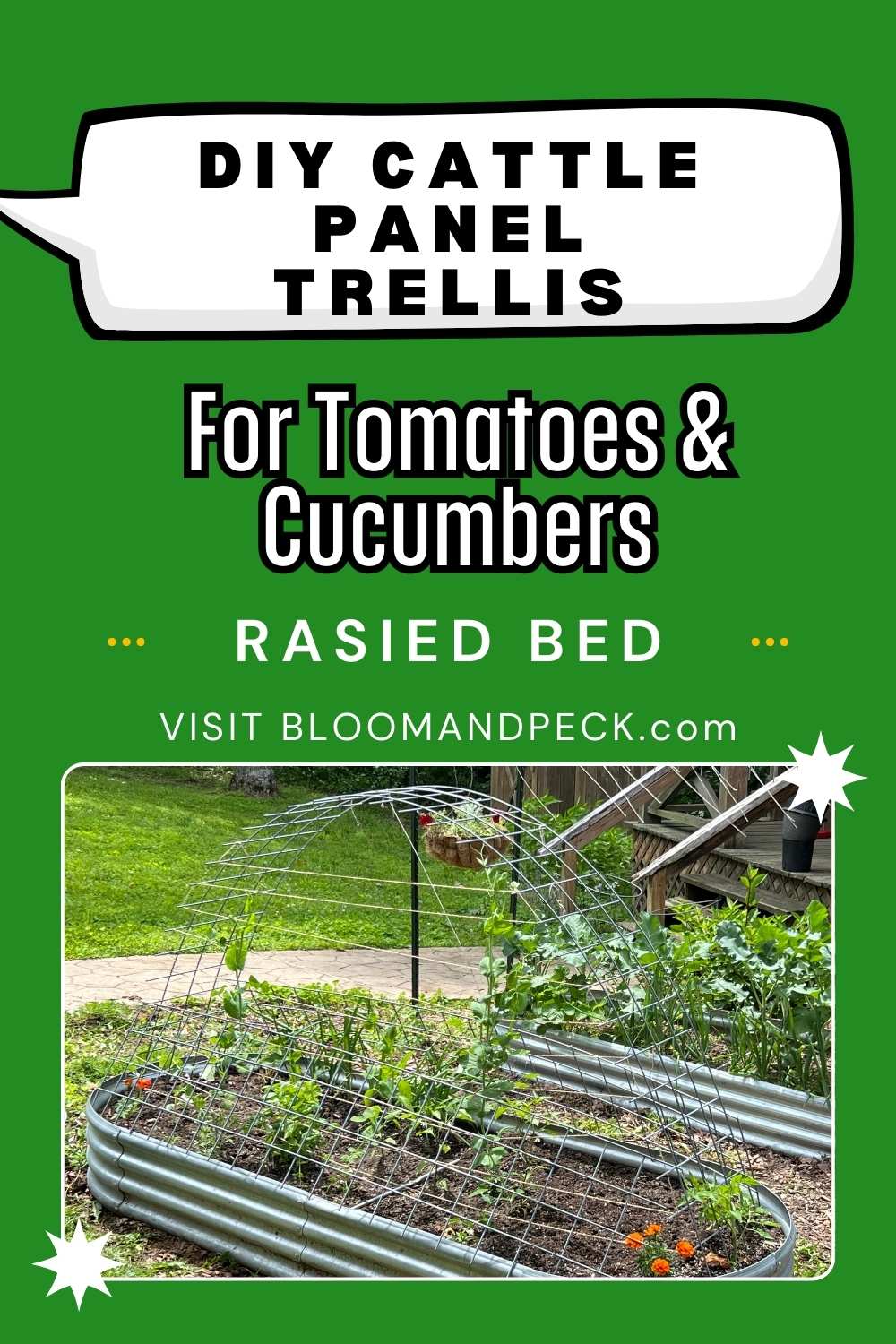
For Part 4, I’m spilling the beans (or tomatoes!) on my arched hog panel trellis. I set up last year because, I AM the Good Idea Fairy, and I had extra hog wire panels from my porch rail project!
Need more information on how Growing Tomatoes in Kentucky went? Check the Series out Here
It’s thriving in my 3×8 raised garden bed, supporting a Roma tomato, planted with the trench method. I surrounded it with marigolds and other companion plants in my kitchen garden. Up potting my Roma’s with the Epic Gardening’s 5″ cube pot (use my link for 5% off!), gave my tomato roots a head start they needed. This trellis is a great kitchen garden trellis idea for homesteaders and backyard gardeners. Let’s dig in!

Why a Hog Panel Trellis Is Perfect for Raised Garden Beds
Tomatoes, especially vigorous Roma varieties, need robust support to thrive. A hog panel trellis, similar to a cattle panel trellis, is a budget-friendly, durable solution that adds a charming arch to your raised garden bed.
Technically, I was a on a budget, and had the hog panel left over from my porch project, so I used it! The 4″ squares are perfect for tomato vines an I am planting cucumbers at the other end.
You can see in the picture below with my very first garden trellis, I used the cattle panel for my squash plants. The bigger hole sizes make it easy to weave the bigger vines and squash through.

See the build for this type of trellis on conquring the trellis Part 5 series
Unlike flimsy tomato cages or concrete mesh, this trellis handles heavy fruit loads and creates a stunning focal point for your container or kitchen garden.
It’s customizable for any bed size, ideal for small spaces. I used left over wire hog panels (4″ squares, 16″ tall, and 16′ long) from my porch project, but you can source them from feed stores or repurpose used sections from Marketplace for sustainability. Yes you can also use a Cattle Panel to make this trellis.
Hog Panel vs. Cattle Panel: What’s the Difference?
Hog panels have 4″x4″ squares and are 36-48″ tall, sometimes with smaller squares at the bottom—perfect for smaller vining crops like tomatoes. Cattle panels are taller (50″) with graduated rectangles (8″x4″ to 8″x6″), great for larger plants like squash but versatile for tomatoes too. Both come in 16’ lengths, ideal for a cattle panel trellis arch or hog wire trellis.

Mostly it is the size of the squares and the height of the panel itself. Hog panels are usually 4″x4″ squares from top to bottom and are 36″-48″ tall. Some Hog panels have a graduate small square on the bottom so baby pigges can’t escape. Great for smaller vining fruits and veggies.
Cattle panels are usually 50″ tall and graduated 8 in. vertical x 4 in. horizontal to 8 in. vertical x 6 in. horizontal rectangles. Works nice for larger things like squash, but also works for the smaller stuff too.
Materials for Your DIY Tomato Trellis
Here’s what I used to create my arched trellis:
- Cattle /Hog / Livestock Panel: A 16-inch wide strip cut from a standard 4×16-foot panel using bolt cutters. Sounds a little intensive, but it made sitting and cutting pretty easy. These sections were also repurposed from my section of porch railing so I was able to have no waste.

- 3×8 Metal Raised Bed: I used a raised bed that was gifted to me, but for future projects, I’d like to try the Birdies raised beds from Epic Gardening for its durability mulitiple size and shape options.

- Tools: Bolt cutters, gloves, and a measuring tape. I got a short pair of bolt cutters from harbor freight a few years ago, when my good idea fairy mind had me making barbwire wreaths 😄
- Roma Tomato Plant: Potted up in a 5″ cube pot from Epic Gardening to encourage robust root growth.

The total cost? If I had to go to my local feed store Under $30, since I already had the raised bed, garden soil, tomato start, and bolt cutters it was free.
If you need bolt cutters Harbor Supply has some for under $30 and see my 7 best Raised beds for Kentucky HERE.
Your panels will range in price in your area but you can source them from feed stores, feed mills, and sometimes hardware stores.
You can even find small sections or used sections on Marketplace to save more. If ya don’t have a pick up this might be a good option, if ya can sweet talk someone into delivering.
Step-by-Step: Building the Cattle Panel Trellis
- Cut the Hog Panel: Using bolt cutters, I trimmed a 4×16-foot hog panel to a 16-inch wide strip (4 squares). This fits across the 3-foot width of my raised bed. Your width may vary. Measure twice cut once!
- Shape the Arch: I inserted one end inside the 3×8 raised bed, letting the frame hold it securely. Then, I bent the panel into an arch, tucking the other end into the opposite side. I kept the arch low enough to reach from a stool or standing. It was pretty easy to do by myself.
- Secure the Base: The bed’s metal frame keeps the panel in place—no stakes needed!
- Check Stability: Shake the trellis gently, then fill in soil mix. Mine’s held up since last year through wind and rain.
This took me about an hour due to my physical restrictions, but you might be faster. Unlike the straight trellis in my Mother’s Day garden , this DIY arched trellis adds a fetching visual and maximizes vertical space.
🍅 Growing Tomatoes in Kentucky? Grab my free Zone 6 & 7 Tomato Planting Guide — real variety recommendations, region-specific dates, and the mistakes I already made so you don’t have to.
Planting the Roma Tomato with the Trench Method
My Roma tomato’s tag didn’t specify if it’s determinate or indeterminate—hoping for indeterminate for max growth up the trellis! To give it a strong start, I used the trench planting method, inspired by Growfully with Jenna. This technique maximizes root growth by burying the stem horizontally, perfect for tomato plant support. Here’s how I did it:
- Prepare the Plant: My Roma tomato was potted up in Epic Gardening’s 5″ cube pot, which promotes air-pruning and healthy root development. The deep, square design gave the plant a head start before transplanting.
- Dig the Trench: In the raised bed, I dug a 6-inch trench under the trellis arch deep enough at one end for the roots and enough to bury the stem at least 4″
- Plant Horizontally: I laid the Roma tomato’s stem horizontally in the trench, leaving only the top leaves above soil. I gently guided the top through a hole in the cattle panel to direct its upward growth.
- FEED the tomato plant: Jenna recommends feeding the soil if your soil is poor, like my raised bed (it’s a second year bed and I am starting it fresh) with non synthic fertilizer. I amended with some of my compost and I used Dr Earth Organic Tomato Fertilizer
- Cover and Water: I covered the stem with soil, making it nice and cozy and watering.
This method suggests a robust root system, which means more tomatoes later! See the method here with Jenna:
Why Roma Tomatoes Love This Setup
Roma tomatoes will thrive in this hog panel trellis and trench method setup, whether determinate (bushy, 3-4’ tall) or indeterminate (vining, up to 6-8’ tall). Below is last years determinate, and I still had to tie them up. SO MUCH GOODNESS.

This trellis supports both, with 4″ squares for weaving taller vines. The trench method boosts root growth, creating a stronger plant for Roma’s meaty, plum-shaped fruits, ideal for sauces.
The Epic Gardening 5″ cube pot preps a dense root system, while the raised bed ensures drainage and warmth, loved by Romas in my Zone 7 garden.
I planted marigolds around the base to deter pests, as outlined in my companion planting series, and added basil nearby for flavor synergy. Snap peas and jalapeño peppers in the same bed create a thriving polyculture, maximizing space.
Why the Epic Gardening 5″ Cube Pot?
I can’t say enough about the 5″ cube pot from Epic Gardening. Its unique design encourages air-pruning, preventing root-bound plants and fostering a dense, healthy root system. My Roma tomato thrived in this pot before transplanting, giving it a strong foundation for the raised bed. If you’re starting seeds or potting up transplants, this pot is a must-have for any kitchen garden.


Tips for Tomato Success in Your Raised Garden
- Water Consistently: Roma tomatoes love even moisture, especially in raised beds. I water deeply every few days, depending on the weather in my Zone 7 garden.
- Train the Tomato: As the Roma grows, gently tie it to the trellis with soft twine to keep it climbing. Since my panel is a 4″ square I am going to try to weave it through as it grows!
- Mulch: Add a layer of straw or wood chips to retain moisture and reduce weeds. Which I have not done yet, but I did cover the trellis with my row cover.
- Check the Trellis: Periodically ensure the cattle panel is secure, especially after heavy rain or wind.
Why This Trellis Works for Any Gardener’s Raised Bed
This DIY trellis is a game-changer for container gardening. It’s affordable, easy to build, and maximizes space in a 3×8 raised bed. The arched trellis design not only supports your tomatoes but also leaves space underneath to enhance the garden output. When all the veggies grow up and over, it adds a gorgeous aesthetic that’s perfect for browsing for tomatoes, peppers, and peas while enjoying your morning coffee.
This raised bed trellis maximizes space and fosters a vibrant polyculture by supporting companion plants like marigolds, basil, snap peas, and jalapeño peppers in my 3×8 raised bed. Marigolds deter pests, basil enhances tomato flavor, snap peas bring nitrogen, and jalapeños thrive alongside.

It’s all about creating a diverse, sustainable kitchen garden, as detailed in my companion planting series. I will add to the series as I add more plants and herbs! Combine with the trench method and Epic Gardening’s seed starting trays for a bountiful, eco-friendly harvest.
Want to see it in action? Check out my 30-second Reel showing the finished trellis and Roma tomato setup! Curious about how it’s holding up? Drop a comment below or join our gardening community on [Instagram/Pinterest/X] to share your own tomato trials.
FAQ: Your Tomato Trellis Questions Answered
Yes, especially indeterminate varieties like some Romas! A hog panel trellis keeps plants upright, improves air circulation, and boosts yields.
Absolutely! It works great for cucumber trellis, which I planted at the opposite end of the trellis, pole beans, or my favorite Thelma Sanders Squash.
If the plant starts leaning or the trellis wobbles, add soft ties or check that the panel is secure in the bed. If it’s not in the soil you will have to stake the trellis.
The trench method boosts root growth, which can lead to stronger plants and more fruit, especially for indeterminate varieties.
I recommend the 5″ cube pot from Epic Gardening and their seed starting trays for its root-boosting design. Use my link here and get an additional 5% off.
Marigolds deter pests, while basil enhances flavor. Try snap peas, onions, peppers, even lettuce for a polyculture bed, as I did!
Part 5 is coming soon, where I’ll test an in-ground arched cattle panel trellis with 2 styles of staking for another tomato variety. Compare this arched trellis to my straight trellis in Part 1 here and stay tuned for the next setup!
Loving the Tomato Trials series? Stay tuned for Part 5, where I’ll share how I build an in-ground trellis for another tomato variety. Subscribe or follow me on [Instagram/Pinterest/X] to catch the next setup and share your own trellis tips!”
Some links in this post are affiliate links (but not all). This means if you click and buy, I might earn a small commission at no extra cost to you. Your support helps keep my garden dreams growing—Now let’s dig in.
References
- Growfully with Jenna. (2024, April 24). How to plant tomatoes using the trench method [Video]. YouTube. https://youtu.be/u55JFK6LIsI?si=Qxj3yoizrtCS6sId. Accessed May 24, 2025.
- Backyard Eden. (n.d.). How to grow tomatoes vertically. https://backyard-eden.com/how-to-grow-tomatoes-vertically/. Accessed May 24, 2025.