
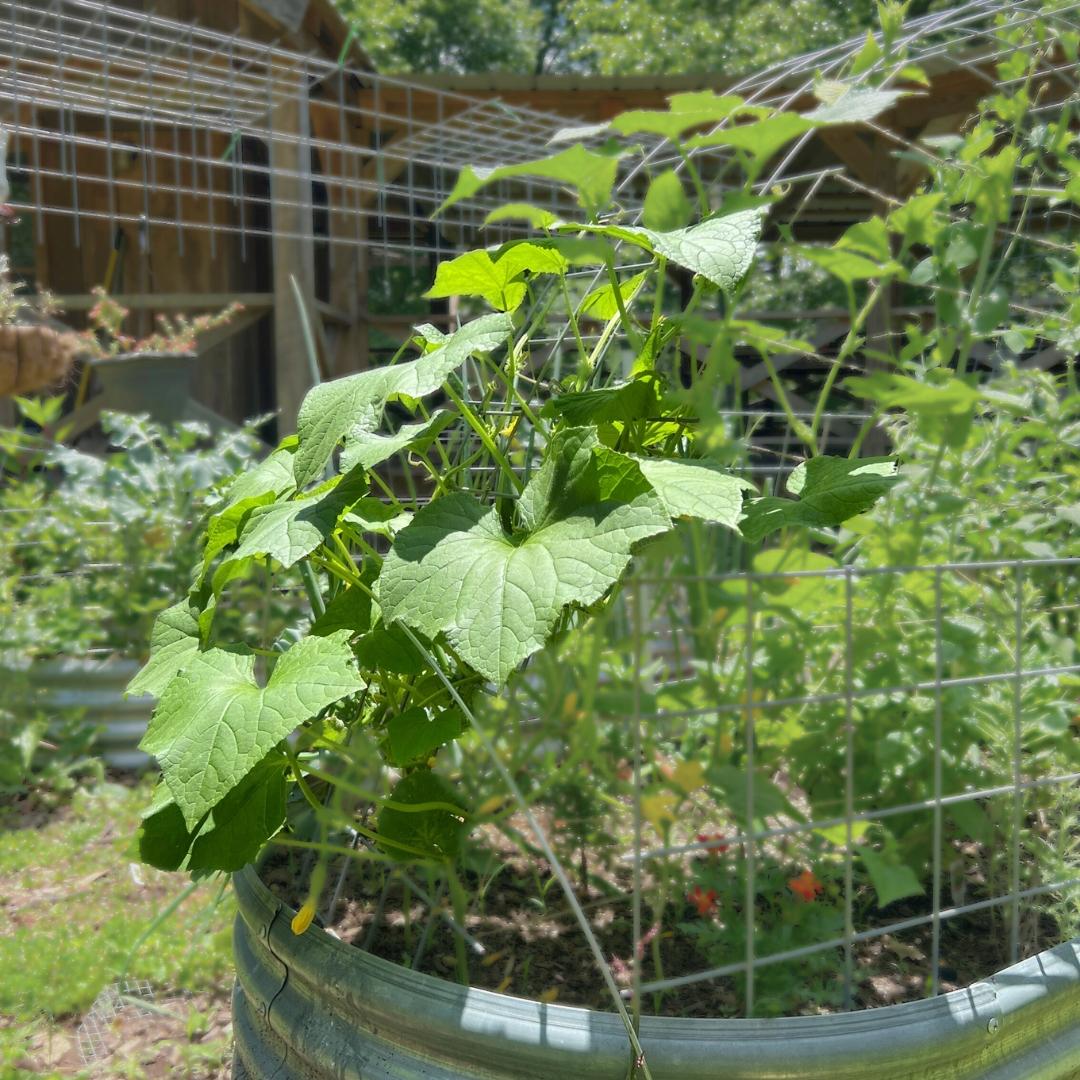
How to Grow Cucumbers in a Kentucky Raised Garden Bed
This summer I grew my first cucumbers in a Kentucky raised bed—and honestly? I had no idea what I was doing. But that Pok Choi I randomly planted? It saved my entire harvest. That cattle panel trellis I threw together? Pure gold for our humid Kentucky summers. And those “Homemade Pickles” cucumbers from Botanical Interests? They actually lived up to the hype.
If you’re growing cucumbers in Kentucky clay soil for the first time, this is what actually worked—mistakes, happy accidents, and all.

Why Raised Beds Work for Kentucky Cucumbers
Cucumbers thrive in rich, well-draining soil, and my 3×8 raised bed is the perfect home for them. Kentucky’s clay soil was a challenge for me this year with my back surgery, so I decided to grow in a metal raised garden bed.
What I did:
- Mixed compost and aged manure into my raised bed soil
- Aimed for a pH of 6.5–7.0 (sweet spot for cucumbers)
- Added vermiculite
- Added organic balanced fertilizer at planting time
- Result: Vigorous vines that climbed like crazy


Pro tip for Kentucky gardeners: Get a soil test through your local Extension office before planting. Many Kentucky Extension offices do this for FREE, and it takes the guesswork out of amendments. You can get samples from your raised bed and your garden beds!
When to Plant Cucumbers in Kentucky
| Region | Direct Sow Outdoors | Last Planting Date | Start Indoors |
|---|---|---|---|
| Western Kentucky | April 20 | July 15 | Late March – Early April |
| Central Kentucky (Zone 7 – Adair County) | May 1 | July 1 | Early to Mid-April |
| Eastern Kentucky (Zone 6b) | May 10 | June 15 | Mid to Late April |
Wait for warm soil and no more frost. Here’s what worked for me in Central Kentucky (Zone 6b-7a):
I planted my ‘Homemade Pickles’ cucumbers in late May after making sure:
- Soil temperature hit 70°F (I used a soil thermometer 2 inches deep)
- We were at least 2-3 weeks past our last frost date
- Nighttime temps were consistently above 50°F
Kentucky’s “Derby Rule”: Lots of Kentucky gardeners wait until after Kentucky Derby weekend (first Saturday in May) to plant tender crops like cucumbers. It’s a safe bet, though you can plant earlier if soil temps are right and frost risk is gone.
Your planting window will vary by location:
- Northern/Eastern Kentucky: Late May is safest
- Central Kentucky (Louisville, Lexington): Mid to late May
- Southern/Western Kentucky: Can plant as early as mid-May
Pro tip: Don’t go by the calendar—go by soil temperature. Stick a soil thermometer in your bed at 8am. If it reads 70°F or higher for 3 consecutive days, you’re good to plant.
For earlier harvests: Start seeds indoors 2-3 weeks before your outdoor planting date. I did this with some of mine and got cucumbers earlier than my direct-sown plants.
Growing more than cucumbers?
Grab a free Kentucky Vegetable Planting Calendar and keep updated on real life growing in Kentucky
The Accidental Trap Crop That Saved My Cucumbers
Here’s where things got interesting. I planted Pok Choi in the same bed as my cucumbers, jalapeños, onions, marigolds, and a bush Roma tomato. I just wanted variety—had no clue I was creating a pest management system.
Turns out? Pok Choi acts as a trap crop for Asian beetles in Kentucky gardens.
Those beetles went straight for the Pok Choi and left my cucumbers alone. I never got to eat the Pok Choi (RIP), but it took one for the team and protected my cucumber harvest.
I had no idea my Pok Choi would be a trap crop, I didn’t get to eat any but it sure saved my Cucumbers! -Erin Bloom and Peck

Asian beetles couldn’t resist the Pok Choi, leaving my ‘Homemade Pickles’ vines mostly untouched. Marigolds and Basil added an extra layer of pest deterrence with their natural repellent properties, while onions helped keep the soil ecosystem balanced.
What Else I Planted Nearby:
- Marigolds – Natural pest deterrent
- Basil – Repels aphids and beetles
- Onions – Keeps soil ecosystem balanced
- Jalapeños – Benefited from trellis shade
- Bush Roma tomato – Space-efficient variety
Need Some Seeds? Check out Epic Gardening Here
Try this: Plant a few rows of mustard greens or Pok Choi near your Kentucky cucumber beds. Let me know if it works for you!
Growing Cucumbers Vertical Growing: Why Trellises Matter in Kentucky
Space is precious in a 3×8 raised bed, so I used a partial cattle panel trellis to train my vining ‘Homemade Pickles’ cucumbers upward.
Why vertical growing works in Kentucky:
- Saves space – More room for companion plants
- Improves airflow – Critical for our humid summers
- Prevents disease – Reduces powdery mildew risk
- Easy harvesting – I could see ripe cucumbers from my kitchen window
- Provides shade – Kept jalapeños cool underneath
I love thrifting and using what I have. I used a section of cattle panel we had used for a trellis and placed It in the garden bed, it created the perfect little raised garden bed arch!
Erin Bloom and Peck
This sturdy cucumber trellis worked well in my tightly spaced Kitchen garden. The cumbers thrived on it. The vines’ natural tendrils grabbed the panel, creating a lush green wall that shaded my jalapeños below. Bonus Bloom moment for the Kentucky Sun!
👉 DIY Trellis Tip: Check out the Tomato Trellis Post I have here it talks about how I set this up.
👉 Growing tomatoes alongside cucumbers? Here’s what varieties actually survive Kentucky summers. Check it out here
Growing ‘Homemade Pickles’ Cucumbers: What I Learned
👉 Watching my cucumbers grow in my Kentucky garden is bliss! Here’s a peek at their journey:I planted ‘Homemade Pickles’ cucumber seeds from Botanical Interests—a high-yielding variety perfect for pickling or fresh eating.
Cucumber Planting Timeline:

Seed Starting
- Start Seeds start them inside in trays a couple weeks before
hardening the plants off and planting outside
Safe Cucumber Planting Dates
Eastern Kentucky May 10–June 15
Central Kentucky May 1–July 1
Western Kentucky April 20–July 15
- Waited until soil hit 70°F
- Direct sowed in raised bed
- For earlier crops, start seeds indoors 2-3 weeks before transplanting
Vegetative Growth
- Vines emerged within 2 weeks
- Started grabbing the cattle panel trellis immediately
- Watered deeply 1-2 times per week
- Kept soil moist but not soggy
Flowering & Fruiting
- Picked every 2-3 days to keep plants producing
- Male flowers appeared first
- Female flowers followed (tiny cucumber visible at base)
- Started harvesting at 1½ to 6 inches
Gardener’s Note: Frequent harvesting encourages more fruit production. Don’t let cucumbers yellow on the vine—it signals the plant to slow down.
Storing Fresh Cucumbers in Kentucky Humidity
If you know, you know, the thing about Kentucky summers: it’s HUMID. And cucumbers are 96% water, so they lose crispness fast if you don’t store them properly.

My Kentucky Storage Hack:
Ideal cucumber storage is 50–55°F. My fridge is too cold (makes them mushy), and my basement is 70°F (too warm).
What worked for me:
- Put fresh-picked cucumbers in a colander
- Place colander in an ice chest
- Add a couple cups of ice daily
- Drain water as ice melts
- Result: Crisp cucumbers for a full week
This gave me enough time to collect a big batch for fermenting!
Troubleshooting Common Problems
Gardening isn’t without challenges, but here’s how I tackled common issues
Pests
What worked: Pok Choi trap crop + marigolds + basil kept pests manageable. For extra protection, use floating row covers until flowers appear. (As soon as the Pok Choi was gone, they hopped over to the cucumbers-next year succession plant that stuff)
Poor Pollination
Solution: If you see flowers but no fruit, hand-pollinate. Use a small brush to transfer pollen from male flowers to female flowers.
Bitter Cucumbers
Causes: Irregular watering or overripe fruit Fixes: Water consistently. Harvest young. Remove blossom end before storing.
Limited Space
Solution: Vertical trellises + bush-style tomatoes maximize small raised beds. My 3×8 bed produced tons of food!
FAQ: Growing Cucumbers in Kentucky
Plant cucumbers after the last frost (mid to late May in most of Kentucky) when soil temperatures reach 70°F. You can start seeds indoors 2-3 weeks earlier for a head start. UKY Gives this guideline:
Eastern Kentucky May 10–June 15
Central Kentucky May 1–July 1
Western Kentucky April 20–July 15
Yes! Do succession planting for extended harvests:
First planting: Mid to late May
Second planting: Mid to late July (for fall harvest)
Cucumbers need well-drained, nutrient-rich soil with a pH of 6.0–7.0. Since Kentucky clay soil is heavy and poorly draining, raised beds are your best friend. Amend with compost or aged manure before planting.
Cucumber beetles love Kentucky gardens. Try these:
Plant Pok Choi or mustard greens as trap crops
Use row covers until flowering starts
Rotate crops yearly
Choose resistant varieties like ‘Homemade Pickles’
Vertical growing is especially helpful in Kentucky’s humid summers:
Improves airflow (prevents powdery mildew)
Saves garden space
Makes harvesting easier
Reduces contact with damp soil
Use sturdy trellises like cattle panels, A-frames, or vertical netting.
I had great success with ‘Homemade Pickles‘ from Botanical Interests. Other good Kentucky varieties:
Marketmore 76 (disease-resistant)
Straight Eight (classic slicing)
National Pickling (compact vines)
Choose varieties resistant to powdery mildew and cucumber mosaic virus—common in Kentucky. I will follow up with a post on what i grow and how they perform.
What’s Next: Fermenting My Kentucky Cucumbers
I’m currently fermenting my ‘Homemade Pickles’ harvest, and the anticipation is KILLING me. These firm, crisp cukes are perfect for fermentation.
👉 Want to grow your own food in Kentucky?
Check out more blog posts Here from our Kentucky Garden to yours.
Your Turn: Growing Cucumbers in Kentucky
This was my first time growing cucumbers in a Kentucky raised bed, and despite the learning curve, it was a success. The Pok Choi trap crop, cattle panel trellis, and ‘Homemade Pickles’ variety all proved their worth in Central Kentucky’s challenging growing conditions.
What’s working (or not working) in your Kentucky garden this year? Drop a comment below—I’d love to hear your “peck moments” and what you’re learning!
🌱 Ready to Start Growing?
Grab ‘Homemade Pickles’ seeds from Botanical Interests and start planning your Kentucky cucumber bed for next season!
This post contains affiliate links. If you purchase through links, like the one for How to grow cucumbers in Kentucky with Botanical Interests Homemade Pickles cucumber seeds,we may earn a small commission at no extra cost to you. Thank you for supporting Bloom and Peck!
References
- Leaf Green Gardens: Best Cucumber Planting Dates in Kentucky
- AIGardenPlanner: Ultimate Guide: When to Plant Cucumbers in Kentucky
- Growing Your OwnA beginner’s guide to gardening, UKY Publication
- OSU Extension Service: Grow Your Own Cucumbers
- A Beginner’s Guide to Vegetable Gardening in Kentucky: Plans and Preparations, University of Kentucky Publication

