
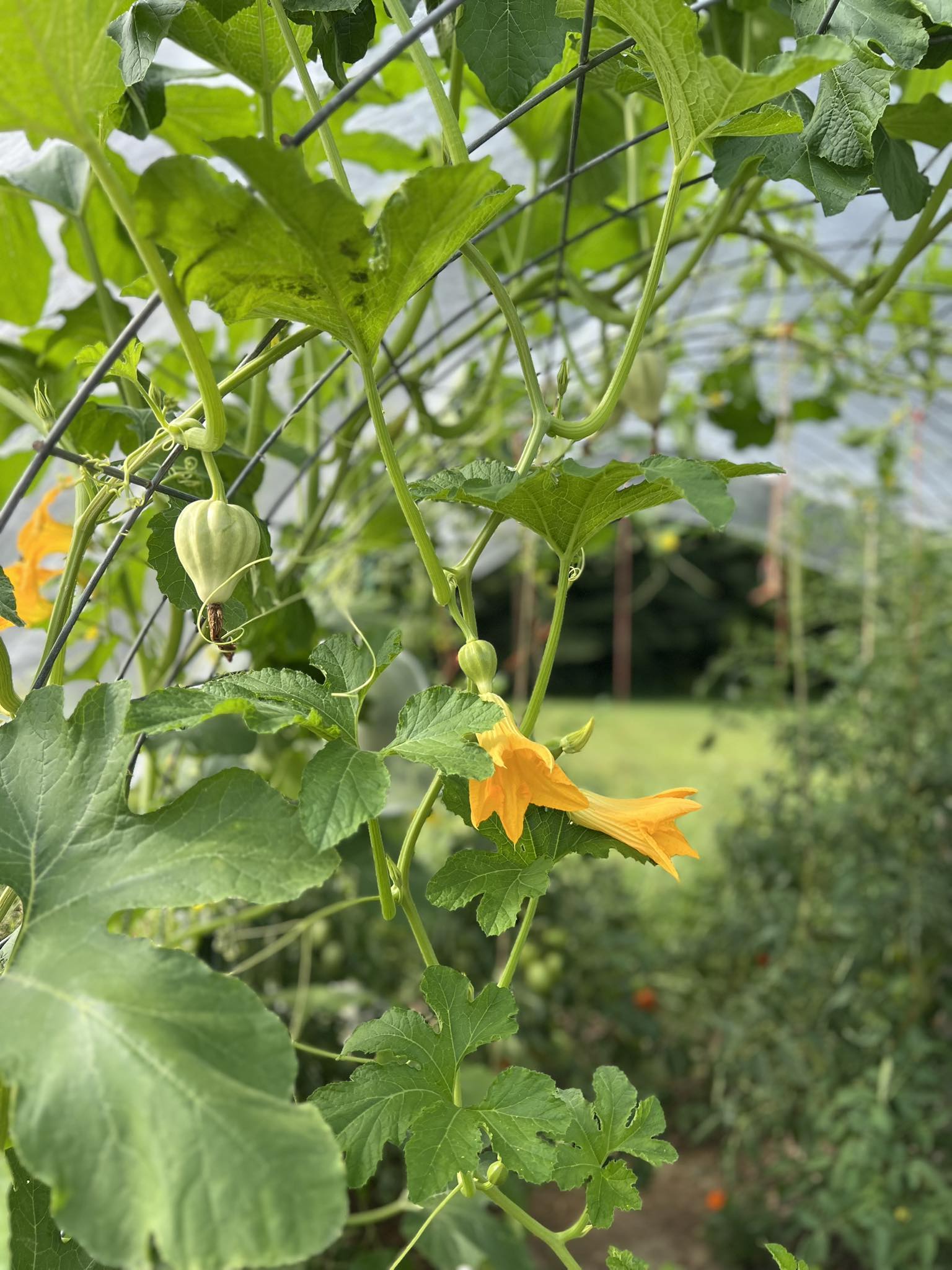

I started searching for “how to grow Thelma Sanders squash in Kentucky”, as I had grown ONE plant in Washington. And my journey gifted me with a full-blown squash chandelier hanging from a cattle panel arch in the middle of my Kentucky garden — and I am not even a little bit sorry about it.
If you’ve been gardening in Zone 7 for more than a season, you know how it goes: the clay soil pushes back, the summer heat is relentless, the rain comes in sideways, and the pests act like they have a standing invitation. So when I started growing Thelma Sanders sweet potato squash vertically on a cattle panel arch, I was actually excited to see if it would work!
I didn’t expect how well it would work in this Kentucky amended soil. Thelma Sanders acorn squash climbing a cattle panel arch turned out to be one of the most productive, beautiful, and genuinely manageable things I’ve grown on this homestead. In this post, I’m walking you through exactly how I did it — the setup, the planting dates, the care, the harvest, and the honest lessons from my first year doing it. And I am excited to plant them again!
Whether you’re working with a small garden footprint, tired of squash sprawling into every corner, or just want to try something that looks like it belongs in a fairy tale — this is for you.
Why Grow Thelma Sanders Heirloom Acorn Squash on a Trellis
A Little History on This Variety
Thelma Sanders Sweet Potato Squash is an open-pollinated heirloom acorn squash that’s been quietly passing through seed savers’ hands for generations. It’s named after Thelma Sanders of Adair County, Missouri, who is credited with preserving it. The variety produces cream to pale gold fruits with a sweet, nutty flavor that genuinely does remind you of sweet potato — especially when roasted.
Here’s something worth knowing if you’ve been researching this variety: almost every article online references a “field trial” as the basis for its reputation. I tracked that down. After emailing around, I learned it was most likely an informal on-farm trial, which may or may not have been a published study. There’s a slim chance some data exists on SeedLinked, possibly uploaded by Dylan Bruce of Circadian Organics (now Driftless Seed Supply), but I was not provided a link, and I could not find it. I share that not to discourage you, but because you deserve to know your sources. The enthusiasm for this variety isn’t based entirely on research — it’s based on gardeners growing it, saving seeds, and passing it on. That actually tells you more.
Why Growing Thelma Sanders Squash on a Trellis Makes Sense
Thelma Sanders vines are vigorous. Left on the ground, one plant will spread 8 to 10 feet in every direction. On a cattle panel arch, that same energy goes up and over, keeping your garden footprint tight and your fruits hanging where you can see them, harvest them, and admire them a little. Mine almost reached the ground on the opposite side of the arched trellis!
The University of Kentucky Cooperative Extension actually recommends growing vining winter squash over a cattle panel arch as a space-saving strategy — so you’re in good company. The practical benefits are real: better airflow around the leaves, less soil splash that spreads disease, easier pest monitoring, and aesthetics that make your garden feel like it’s actually working with you instead of against you.

When to Plant Thelma Sanders Squash in Kentucky (Safe Planting Date Grid)
This is one of the most searched questions for Kentucky squash gardeners — and one of the least specifically answered online. Here are the safe planting dates for winter squash in Kentucky, based on University of Kentucky Extension guidelines:
| Kentucky Region | Safe Direct Sow / Transplant Dates |
| Western Kentucky (Zone 7a) | April 20 – July 15 |
| Central Kentucky (Zone 6b–7a) | May 10 – July 1 |
| Eastern Kentucky (Zone 6a–6b) | May 15 – June 15 |
Source: University of Kentucky Cooperative Extension, NEP-250 Winter Squash and Pumpkins
🌱 For further growing in Kentucky information, check out my gardening Hub HERE
For Thelma Sanders specifically, my approach in Zone 7, Kentucky:
I started my seeds indoors 3 weeks before my transplant date, which puts my seed starting in early to mid-April. I transplant outside in mid-May (as the saying goes, “Plant After Derby Day”) once soil temperatures are consistently above 60°F. Cold soil stalls squash growth even after frost danger has passed — patience here genuinely pays off.
The Cattle Panel Arch I Used (And Why It Works So Well for Heavy Squash)

I cover the full build in my Tomato Cattle Panel Trellis, and this is the exact same structure. Same panels, same setup, totally different crop, it also applies when you are searching, “how to grow Thelma Sanders squash on a Trellis”.
After experimenting with cattle panels, I think they are wildly underrated for heavy fruiting crops. They’re designed to take some abuse from farm critters — a few hanging Thelma Sanders squash is genuinely not a challenge for the structure.
Here’s what makes the arch work so well for squash specifically:
- Sturdiness. Thelma Sanders fruits reach 1 to 2 pounds each, and you’ll have multiple fruits per vine at peak season. Cattle panels don’t flex, sag, or need mid-season reinforcement the way bamboo or wood can.
- Airflow. The open grid lets air move freely through the canopy. Powdery mildew thrives in still, humid conditions — an arch trellis in an open garden gives you passive airflow that ground-sprawling vines simply don’t get.
- The arch shape. An arch distributes vine growth naturally. The plant climbs up and cascades over the top, producing hanging fruits on both sides that are easy to harvest from either direction. Bonus- you can spot those peasky pests fast!
- Shade cloth compatibility. This is Zone 7 specific and I’ll cover it fully in the care section — but Kentucky summer sun and hard driving rain are real problems for trellised crops, and cattle panels make shade cloth attachment simple.
How to Grow Thelma Sanders Squash / Acorn Squash Vertically: Planting for the Trellis
Spacing and Timing for a Cattle Panel Arch
For a standard cattle panel arch (roughly 16 feet long, 5 feet wide at the base), I planted two Thelma Sanders plants — one at each base of the arch. That gives each vine room to claim its half without competing.
Planting timeline for Zone 7 Kentucky:
- Seed starting indoors: Early to mid-April
- Transplant outside: Mid-May (after last frost, soil above 60°F)
- Expect first harvest: Late August through September
Two plants per arch is the right number. I know you’ll want to plant more. Don’t. They need the room, you’ll thank me later.
How to Grow Thelma Sanders Squash / Acorn Squash on a Trellis: Training the Vines
Squash vines don’t naturally know they’re supposed to go up. For the first week or two, you’re the one making that decision for them.
I used a tomato clip to attach the main leader vine to the lower rungs of the panel every few days as it grew. The goal is to guide, not force — you’re pointing the vine in the right direction and letting it find its grip with its own tendrils.
Once vines reached about three feet up the panel, they started grabbing on their own, and I mostly stepped back. Squash tendrils are strong, and they figure it out quickly. I kept my eye on the ones that needed extra guidance until they got over the top.
A few things that helped:
Check vines every two to three days during early summer active growth. Vines can put on several inches in a day during peak growing weather, and a vine that flops sideways and starts heading for the ground is harder to redirect once it’s set in that direction.
Don’t try to force a vine that’s clearly heading somewhere it wants to go. You can nudge, but you can’t win an argument with a squash vine.
One of my favorite moments of the whole grow was watching a bee work methodically through every open flower on the arch one morning. If you have any worries about pollination on a vertical structure, don’t. Thelma Sanders flowers are large, bright orange, and extremely visible to pollinators. I had zero pollination issues.
Supporting the Acorn Squash as They Size Up on the Trellis
I was worried about this, but after growing the cantaloupe on the trellis next to these, I would not fret about the squash falling. I did not use a mesh bag, but if you are worried about pests, they make some great bags that do double duty. They will protect the squash and help hold the squash in place.
Caring for Thelma Sanders Squash Through a Kentucky Summer
Watering
Trellised squash dries out faster than ground-grown squash — the foliage is more exposed to air and sun. In Zone 7 summer heat, I watered deeply at the base two to three times a week, more frequently during heat spells. Water at soil level, not on the leaves. Wet foliage in humid Kentucky summers is an open invitation to fungal problems.
Fertilizing
I side-dressed with compost once when vines started running, and again when fruits began setting. No synthetic fertilizer on this crop. If your clay soil has been amended over several seasons, Thelma Sanders is not a heavy feeder and doesn’t need a lot of pushing — it wants to grow.
The Shade Cloth Decision (Zone 7 Specific)
This is Kentucky-specific advice you won’t find in most squash growing guides, and I think it genuinely matters.
Kentucky summer sun combined with our hard, driving rainstorms is tough on trellised crops. I added 30% shade cloth over the cattle panel arch starting in late June. It served two purposes: it cut the intensity of the afternoon sun on vines and fruits (which can cause stress and bleaching), and it protected hanging fruits from direct rain impact, which can bruise and crack squash before harvest.
Attaching shade cloth to a cattle panel arch is easy — drape and clip. I covered the top of the arch only, leaving the sides open for airflow, and it worked well through the worst of the July heat.
Pruning
I did minimal pruning and let the vines run. If a secondary vine was heading somewhere unproductive — straight toward the ground — I redirected rather than cut. I removed any clearly diseased leaves promptly. Otherwise, I mostly left it alone.
Pests and Diseases to Watch For
Squash vine borers are the main threat in Zone 7. I monitored the base of the vines weekly from mid-June onward, watching for the sawdust-like frass that signals a borer has entered the stem. Vertical growing doesn’t eliminate them but makes monitoring significantly easier.
Squash bugs are relentless in Kentucky. Check the undersides of leaves near the base regularly from June onward and remove egg clusters by hand — that’s the easiest stage to control them. The University of Kentucky Extension notes that egg clusters appear starting in June or July and can be removed by hand or with duct tape before they hatch.
Powdery mildew showed up late in my season, as it does for almost every squash grower. By that point the plants had already produced well, so I didn’t stress it. A diluted milk spray — 1 part milk to 9 parts water applied to foliage — is a legitimate organic prevention method if you want to stay ahead of it early.
Harvesting Thelma Sanders Squash from the Arch
Standing under that arch with squash hanging overhead at harvest time is a moment I want every vegetable gardener to experience at least once. This is when all the work pays off.
How to know when Thelma Sanders is ready:
The skin shifts from green-white to a creamy pale gold or buff color. The stem begins to dry and cork over at the attachment point. Press your fingernail into the skin — it should resist firmly. If it dents easily, give it more time.
On a trellis, the color change is visible in real time because the squash are at eye level. This is one of the underrated harvest advantages of growing squash vertically — you don’t miss the window because you can’t find the fruit under leaves.

Harvesting: Cut with clean pruners, leaving an inch or two of stem attached. Don’t pull or twist — especially on a trellis where the fruit is hanging, pulling stresses both the vine and the fruit.
Curing and storage: The University of Kentucky Extension notes that acorn squash doesn’t require a long curing period like butternut or pumpkins, but I hung mine in mesh bags for 10 days (7-10 recommended). After that, store in a cool location around 50 to 55°F. Expect about a month of good storage quality for acorn types. My Thelma Sanders were harvested at End of August, its March and I am still enjoying them! Learning how to grow Thelma Sanders squash has been a true delight on my Kentucky Homestead.
What I Learned (And What I’ll Do Differently Next Season)
This was my second year growing Thelma Sanders vertically on the cattle panel arch. Here’s the honest version.
What surprised me most: How much the arch changed my relationship to the crop. With ground-grown squash, you’re hunting for fruits under leaves, stepping around vines, feeling like the squash is in charge. On the arch I could see everything — every fruit, every flower, every bee, every problem — visible at a glance. That made me a more attentive gardener without requiring more time.
What worked really well: The shade cloth. I saw everything drooping and the harsh rains blasting down, and I’m glad I did it. The vines held up through some genuinely brutal July heat in ways I didn’t expect from a single layer of shade fabric. So much that I added one to the Kitchen Garden.
What I’d do differently: I’d like to learn how to grow Thelma Sanders squash in a container. I did this with another squash, and I think this one would do great in a self-wicking container garden too. (Nod to Gardening with Leon on YouTube)
What I’d tell a first-timer: Plant fewer plants than you think you need. Two plants on a standard cattle panel arch is enough — I say this as someone who planted four. Thelma Sanders is productive; it grew all the way over to the other side of the trellis. Give each plant space to be its best.
Frequently Asked Questions About Growing Thelma Sanders Squash
In Kentucky, safe planting dates for winter squash vary by region. Western Kentucky gardeners can transplant as early as April 20; Central Kentucky (including the Louisville area) typically plants from May 10 onward; Eastern Kentucky should wait until May 15.
Yes — acorn squash is one of the more trellis-friendly winter squash varieties because the fruits are smaller and more manageable than pumpkins or large butternut types. Thelma Sanders is particularly well-suited to vertical growing, given its moderate fruit size, vigorous climbing vines, and the University of Kentucky Extension specifically recommends cattle panel arches for vining winter squash as a space-saving method.
A standard cattle panel arch stands roughly 5 to 6 feet tall at the peak. That’s sufficient for Thelma Sanders squash — the vines climb up and over with room to spare, and fruits hang at a comfortable harvesting height,
Cattle panels are engineered for a little abuse by animals and are extremely sturdy. Thelma Sanders squash typically weigh 1 to 2 pounds each. Even with a heavy fruit load, a properly anchored cattle panel arch handles the weight without issue. DON’T USE CONCRETE WIRE for this type of trellis. It will fail.
Trellising squash can greatly boost your yield by maximizing space, enhancing air circulation, and minimizing disease risks. Growing vertically helps prevent rot, keeps the fruit clean, and makes harvesting easier, which often results in healthier and more productive plants.
Trellising improves airflow and reduces the damp, sheltered conditions that squash bugs prefer for laying eggs. (I know from experience here) It also makes finding the pests significantly easier, so you catch problems at the egg stage before populations explode. It doesn’t eliminate pests — squash vine borers and squash bugs are persistent in Zone 7 no matter how you grow — but it gives you a real advantage in early detection.
Let’s Grow Something Beautiful
There’s something quietly satisfying about walking out to your Kentucky garden on a July morning and seeing squash hanging overhead like golden lanterns from a trellis you built yourself. That’s what this homestead is about — not perfect conditions, not expensive setups, not waiting until everything is figured out.
If you were looking for How to Grow Thelma Sanders squash on a cattle panel arch, I can say it really works. It works in amended clay soil, it works in Zone 7 heat, it works when you’re still learning and making do with what you have.
Grow it this season and come back and tell me how it went in the comments. I want to hear about your squash chandelier.
Leave a Reply