
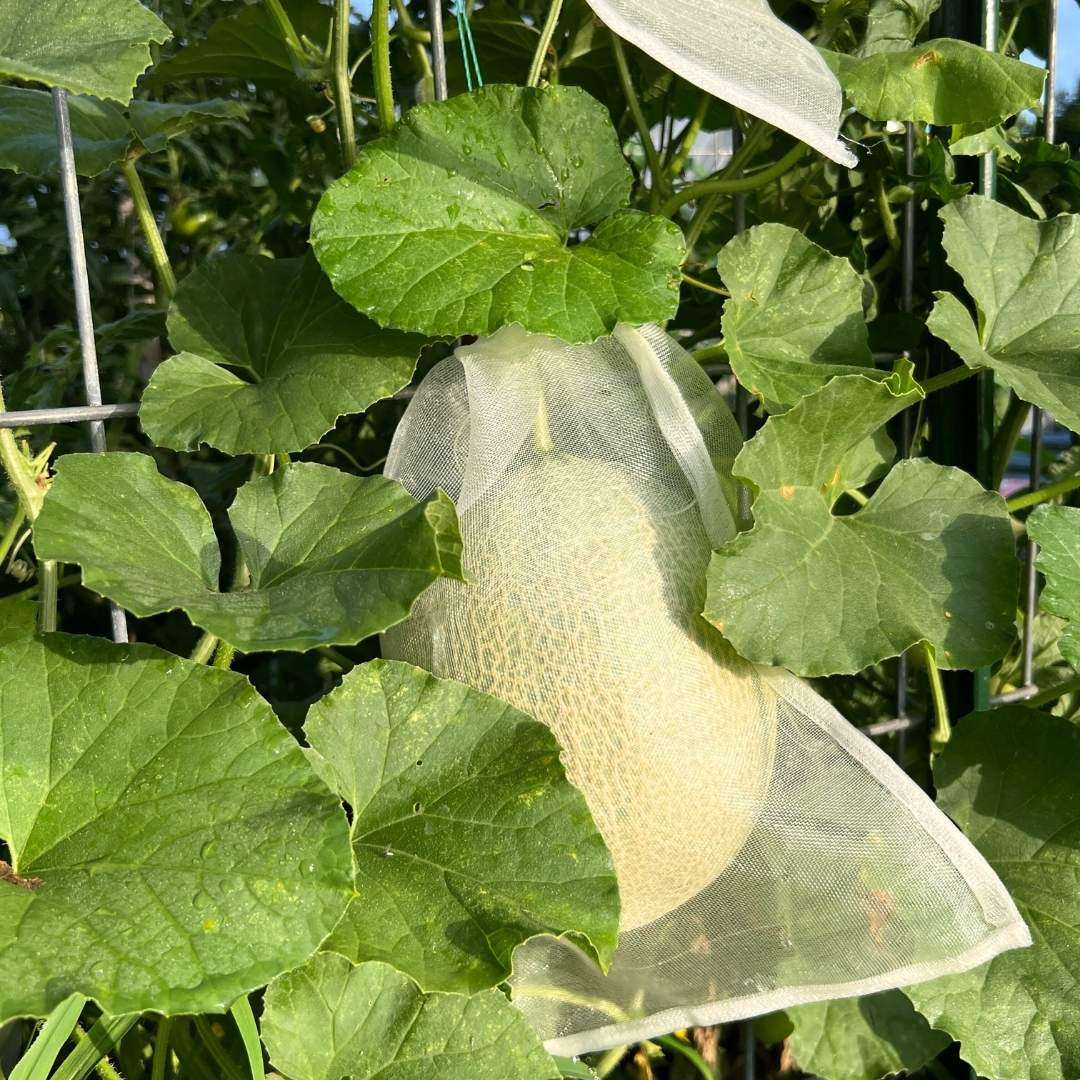
In 2025, I missed the window when I searched for When to plant cantaloupe in Kentucky. Instead, I bought cantaloupe transplants from my local Amish nursery. Stuck them in the ground, trained them up the trellis, and figured I’d see what happened. What happened was cantaloupe — more than I expected, actually, because I didn’t realize the plant keeps producing after that first harvest. I thought I was done. I wasn’t.
This year I’m starting from seed. April 12th, up here on the ridge, my Epic pots on the potting bench. And since I couldn’t find a simple, honest answer to “when do I plant cantaloupe in Kentucky” that wasn’t buried in a commercial farming PDF or a generic article written for no state in particular, I figured I’d write the one I needed last year.
This post contains affiliate links. If you purchase through my links, I may earn a small commission at no extra cost to you. I only share products I actually use in my own garden.

The Quick Answer: When to Plant Cantaloupe in Kentucky
Start seeds indoors: Early to mid-April (4–6 weeks before your last frost date) Transplant outdoors: After your last frost, once soil is consistently 65°F or warmer Direct sow outdoors: Once frost danger is fully past and soil is warm — typically early to mid-May, depending on your region. Keep reading for your region and best types to grow in Kentucky.
Cantaloupe is a warm-season crop that needs a long growing season — 80 to 100 days from seeding to your first ripe melon. In Kentucky, that means you either start indoors in early April or you direct sow in May and accept a later harvest.
When to Plant Cantaloupe in Kentucky — By Region
Kentucky spans two hardiness zones, and your timing matters. Here’s a regional breakdown based on Kentucky grower data and extension guidance:
| Region | Start Seeds Indoors | Transplant Outdoors | Direct Sow Outdoors |
|---|---|---|---|
| Western KY Zone 7a–7b | Late March – Early April | Late April – Early May | Early–Mid May |
| Central KY Zone 6b–7a | Early–Mid April | Early–Mid May | Mid May |
| Eastern KY Zone 6b | Mid April | Mid–Late May | Late May |
Soil must reach 65°F before transplanting. Cantaloupe needs 80–100 days from seed to first harvest.
Not sure which region you’re in? My Kentucky Vegetable Planting Calendar lets you toggle between all three zones — or plug your zip into the Farmer’s Almanac frost date calculator to find your exact last frost date.
My timing (Columbia, KY / Zone 7a): I started seeds April 11th this year (2026)— right in that early-to-mid April window. Last year I bought transplants and put them in mid-May. Both approaches work if you protect your transplants and wait on the soil temperature.
The Kentucky Derby Rule: I adore folklore, it’s based in experience and some good yarns! You’ll hear Kentucky gardeners say to wait until after Derby weekend (first Saturday in May) to plant warm-season crops outside. It’s not a perfect rule, but it’s not wrong either — soil is usually reliable by then, and the risk of a late frost drops sharply. For cantaloupe specifically, it’s a good minimum. Your soil temperature matters more than the calendar.
Best Cantaloupe Varieties for Kentucky
Kentucky’s hot, humid summers favor varieties adapted to southeastern conditions. Here’s what works here:
Athena — This is the variety I picked up from my local Amish nursery in 2025. The most widely grown variety among Kentucky commercial growers by a wide margin, according to the Kentucky IPM crop profile. Consistent producer, disease-tolerant, longer shelf life than most. This is the safe first choice if you’re not sure where to start.
Hale’s Best — (I am trying these this year, 2026) The classic heirloom grown since the 1920s. Heat-tolerant and somewhat drought-tolerant, which matters on a ridgetop or in clay soil that swings between wet and dry. Sweet orange flesh, 79–85 days. A good pick if you want to save seeds year to year.

I will post pictures of the seedlings when they emerge!
Honey Rock — An All-America Selections winner. Reliable producer of 5–7 melons per plant, moderate fusarium wilt resistance, 80 days. Good choice if you want more fruit per plant.
Sugar Cube — A smaller melon (2–4 lbs) bred specifically for disease resistance — powdery mildew, fusarium, the works. If disease pressure has been a problem in your garden, this is worth trying. Also a good trellis variety because of the smaller fruit size.
Wanting to know what to plant when in Kentucky?
Grab a free planting calendar:
Starting Cantaloupe Seeds Indoors in Kentucky
Cantaloupe does not like having its roots disturbed. This is the one thing they say everyone gets wrong the first year — they start seeds in whatever they have on hand, then tear the roots pulling them out at transplant time, and wonder why the plants sulk for two weeks. Use containers with drainage and air pruning so the roots come out clean when it’s time to go in the ground.
I’m starting mine this year in the Epic 4-Cell Seed Starting Trays — they’re specifically designed for crops like cantaloupe, cucumbers, and melons that need more root space than a standard 6-cell tray. The cells are deep enough to support the root system through the full indoor growing period, and you just push the seedling out from the bottom at transplant time. No disturbing the roots, no tools.

This image is the broccoli I grew in the Epic 4 cell seed trays and the peas I grew in the Epic 6 cell seed trays.
My full indoor setup:
- Epic 4-Cell Seed Starting Trays — one or two cells per cantaloupe variety, 2 seeds per cell
- Epic 1020 Universal Bottom Tray — holds 8 of the 4-cell trays, bottom watering keeps things tidy indoors
- Epic Humidity Dome — keeps moisture in during germination so you’re not constantly misting
- Heat mat — cantaloupe seeds want 70–85°F soil to germinate. Without the heat mat, germination is slow and uneven up here on the ridge where the house runs cool – especially in my basement.
- Seed starting mix — not potting mix. Fine-particulate, pre-moistened before you fill the cells. I like the Pro-Mix. I get it at my local Amish nursery too!
What to do:
- Plant 2 seeds per cell, about ½ inch deep
- Once seedlings have their first true leaves, snip the weaker one at soil level with scissors — don’t pull it out
- Remove the humidity dome once seedlings are about an inch tall so air can circulate
- If seedlings outgrow the 4-cell tray before it’s warm enough to transplant outside, pot up into the Epic 5″ Cube Pot — it’s designed exactly for this situation and fits right into the same bottom tray system (I honestly love this pots, see my tomato post for the root growth)
That last point matters in Kentucky. If you start seeds in early April and a cold snap in May pushes your transplant date back, the 5″ cube gives you a few more weeks of healthy indoor growing without the plant getting rootbound. I’ve had that happen. It’s nice to have the option.
According to Penn State Extension, seeds should be started 4–6 weeks before your last frost date and kept warm throughout — cantaloupe seeds won’t germinate well in cold soil.
Transplanting Cantaloupe Outside
Once your transplants have 2–3 true leaves and your outdoor soil has warmed, it’s time to move them out. But cantaloupe is particular about soil temperature. Don’t rush it.
What to check before transplanting:
- Soil temperature is at least 65°F (check 2–3 inches deep, first thing in the morning)
- No frost in the 10-day forecast
- Nights are consistently above 50°F
Harden off your transplants for about a week before they go in the ground — set them outside in a sheltered spot for a few hours a day, increasing exposure gradually. A cantaloupe that goes from a warm house straight into full sun will struggle.
According to the Kentucky IPM Crop Profile, Kentucky commercial growers transplant cantaloupe between late April and mid-May. Most aim for early to mid-May. That lines up with what I’ve seen on my ridgetop — the soil just isn’t reliably warm enough before then up here.
Good Companions for Cantaloupe
- Marigolds — help deter pests, easy to tuck in around the edges
- Nasturtiums — trap crop for aphids, edible bonus
- Basil — anecdotally repels some pests and grows well in the same conditions (I did this in 2025 and will repeat)
- Radishes — fast-growing, help loosen soil, don’t compete for long
- Corn — traditional pairing with melons; the stalks offer some windbreak
For more on companion planting in a Kentucky garden, I’ve been building out this Kentucky Companion Planting Guide →
How to Know When Your Cantaloupe Is Ready to Pick
I did not know this in 2025 when I grew them on my trellis. Cantaloupe does not ripen after you pick it. Once it’s off the vine, what you’ve got is what you’ve got — it will soften but it won’t get any sweeter. So timing the harvest matters.
Signs your cantaloupe is ready:
- The skin turns from green to tan/yellow between the netting
- The stem end gives slightly when you press it gently
- You can smell it — a ripe cantaloupe smells musky and sweet even from a few feet away (be prepared, it is so much better than a store bought)
- At “full slip,” the melon separates from the stem easily with little to no pulling
Penn State Extension notes that cantaloupes at full slip come away from the stem cleanly, and should be checked and harvested daily once they approach ripeness — they can go from perfect to overripe quickly.
And remember: keep checking even after your first melon. That second (and third) wave is real.
Growing Cantaloupe Vertically in Kentucky
I grow mine on a trellis — it saves ground space, improves airflow, and makes harvest much easier. If you’re working with a raised bed or a small garden, vertical cantaloupe is completely doable. You just need to support the developing fruit with a sling (nylon stocking, mesh bag, or a fruit hammock) so the weight doesn’t pull it off the vine too early.
I’ve got a full post on how I grew cantaloupe vertically in my Kentucky garden last year — including what worked, what I’d do differently, and the trellis setup that held up through a Kentucky summer:
→ How to Grow Cantaloupe Vertically in a Kentucky Garden

Planting Cucumbers at the Same Time?
If you’re starting cantaloupe seeds in April, cucumbers go in on nearly the same schedule in Kentucky. I’ve got a full planting guide for those as well:
→ When to Plant Cucumbers in Kentucky
Frequently Asked Questions About Growing Cantaloupe in Kentucky
Most home gardeners can expect 2–4 cantaloupes per plant, though some varieties like Honey Rock can produce 5–7. The number depends on variety, growing conditions, and how well the flowers get pollinated. Cantaloupe sets fruit on a rolling schedule — each flower is pollinated at a different time — so your harvest comes in waves, not all at once. Don’t pull the plant after your first melon. Check the vine every day. There are likely more coming. (which I did not know the first time)
Avoid planting fennel near cantaloupe — it’s allelopathic and suppresses the growth of most nearby vegetables. Potatoes are also a poor companion, as they compete aggressively and share some of the same pest pressures. Brassicas like broccoli, cabbage, and kale are heavy feeders that don’t play well with vining crops. And if you’ve grown other vine crops — squash, watermelon, cucumbers, or pumpkins — in that same spot recently, give it a three-year rest before planting cantaloupe there again to reduce disease pressure.
Yes — and this surprised me the first year! Cantaloupe doesn’t ripen all at once. Because each flower is pollinated at a different time, fruit develops and matures in waves throughout the season. Penn State Extension’s production guide confirms that multiple harvests from a single plant are completely normal. Last year I picked my first cantaloupes and thought I was done. A few weeks later I had more. Keep checking your vines even after that first harvest — the plant isn’t finished yet.
No — not for a successful harvest. Cantaloupe needs 80–100 days of warm weather from seed to ripe fruit, and by September in Kentucky the days are shortening and first frost is typically 4–6 weeks away. There simply isn’t enough warm season left. If you want to plant cantaloupe in Kentucky, your window is early April (starting seeds indoors) through mid-May (direct sowing outdoors). Miss that window and you’re waiting until next year.
Cantaloupe needs 80-100 days from seed to ripe fruit, depending on variety. In Kentucky, if you transplant in early May, expect your first harvest in late July to early August. Hale's Best matures in 79-85 days, Athena in 80 days, Honey Rock in 80 days. The plant continues producing in waves for several more weeks after the first melon, so your total harvest window extends into September.
September in Kentucky is fall garden season. Cool-season crops are your focus — leafy greens like spinach, lettuce, kale, and arugula do well when started in late August through mid-September. Radishes and turnips can go in through September. Garlic is planted in October for a summer harvest the following year. Cantaloupe and other warm-season crops are done for the year by September — shift your energy to the fall garden, and you can keep harvesting well into November.
Sources
- Penn State Extension — Cantaloupe in the Garden and the Kitchen: Seed starting timing, soil temperature, harvest (full slip), trellis slings
- Penn State Extension — Cantaloupe (Muskmelon) Production: Multiple harvests due to staggered pollination
- University of Kentucky IPM Program — Crop Profile for Cantaloupes and Muskmelons in Kentucky: Kentucky grower survey data, transplant dates, bacterial wilt, clay-loam soils, variety data
- University of Maryland Extension — Growing Melons in a Home Garden: Yield estimate of 2–4 fruit per plant
Growing cantaloupe in Kentucky for the first time? Drop a question in the comments. I’m not an expert — I’m a ridgetop homesteader figuring it out — but I’ll share what I know and what I’ve learned the hard way.


Leave a Reply