
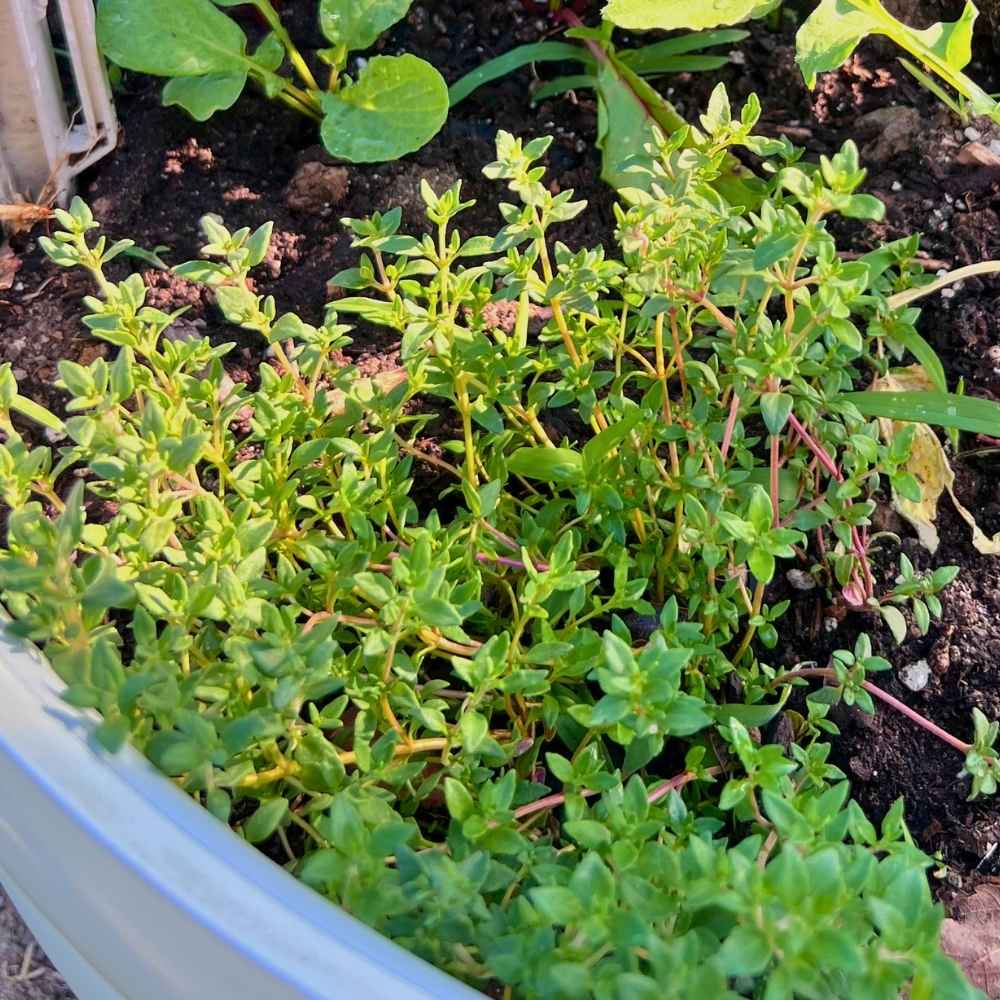
Thyme is one of the best companion plants you can grow in a Kentucky garden. In Zone 7a it grows well with tomatoes, broccoli, beets, peas, radishes, and strawberries — repelling cabbage worms, hornworms, and whiteflies while attracting pollinators. I grow it in containers, raised beds, and in the ground across my Adair County homestead. Here’s everything I’ve tried and what actually worked.
This post is part of my Kentucky Companion Planting Series. I test these combinations in real Zone 7 conditions — not just what the books say.

📚 Kentucky Companion Planting Series
– Basil Companion Planting – Marigold Companion Planting – Thyme Companion Planting with Tomatoes → Companion Plants for Thyme (you are here)
New to companion planting? Start with the Kentucky Companion Planting Hub
Why I Plant Thyme All Over My Kentucky Garden
I started with one lemon thyme plant in a metal tub with my tomatoes. Now it’s in my raised beds, running along my broccoli rows, tucked in with my beets and peas, and I have plans to get it into my strawberry containers this season.
Thyme earns its place everywhere because it does several jobs at once:
- Pest deterrent — thyme contains thymol, a natural compound that repels hornworms, whiteflies, cabbage moths, and cabbage loopers
- Pollinator magnet — its tiny flowers attract bees, predatory wasps, and hoverflies that help control other pests
- Living mulch — its low spreading habit suppresses weeds and retains moisture along container edges and bed borders
- Drought tolerant — in Kentucky’s hot summers, thyme keeps going when other herbs give up
It also happens to smell incredible. That matters when you’re spending time in the garden.
Thyme Companion Planting Grid — What Grows Well With Thyme
Companion Plants for Thyme — Quick Reference Guide
Zone 7a Kentucky — Bloom & Peck Homestead · Based on personal experience and Gardening Know How, Gardenia.net
Not Sure When to Plant Vegetables in Kentucky?
My free Kentucky planting calendar shows you exactly when to plant tomatoes, broccoli, beets, and more — based on Kentucky zone timing, not generic advice.
Adair County tested. No spam, ever.
Thyme With Tomatoes — Container Gardening in Kentucky
Yes — thyme and tomatoes are one of my favorite companion planting combinations in my Kentucky garden. Thyme repels tomato hornworms and whiteflies, attracts pollinators, and acts as living mulch along container edges without competing with your tomato’s deeper root system.
I grew this combination in Zone 7a in thrifted metal tubs with a cattle panel trellis. The variegated lemon thyme spills over the rim while the Cherokee tomato climbs above it. Practical and pretty.
→ Full guide: Can You Plant Thyme With Tomatoes in Containers?

Thyme With Broccoli — In-Ground Rows in Zone 7a
Broccoli and thyme are one of the most useful combinations in my Kentucky garden. Thyme deters the cabbage worms and loopers that absolutely devastated my broccoli last year — and it attracts ladybugs, which eat aphids. That’s two pest problems addressed with one plant.
I grow 16 broccoli plants in a row in a tilled and amended in-ground bed with thyme interplanted alongside them. The thyme stays low while the broccoli grows tall — they don’t compete for light or root space.
If you’ve ever turned over a broccoli leaf and found a small green army looking back at you, thyme is worth adding to your rows. It won’t be 100% foolproof — nothing is — but it’s real help without reaching for a spray bottle.
→ Full guide: When to Plant Broccoli in Kentucky

Thyme With Beets and Radishes — Raised Bed Companions
In my raised bed, thyme grows alongside beets, peas, and radishes. It tucks naturally along the edges without crowding the root vegetables below ground.
For beets specifically, thyme works as a low border plant that helps suppress weeds — something beets really need since they’re slow to germinate and get outcompeted easily. I also use radishes as germination markers at the ends of my beet rows, and the thyme, radishes, and beets all share similar preferences for well-drained soil and full sun.
One note: thyme likes dry, well-drained conditions. A raised bed that dries out quickly between waterings is actually ideal for thyme even if it requires more attention for the beets. Just water deeply when you do water — thyme is forgiving if you miss a day, beets less so.
→ Full guide: When to Plant Beets in Kentucky

Thyme With Peas — Early Season Raised Bed Pairing
Peas go in early in Kentucky — sometimes as soon as late February in western Kentucky — and thyme is already in the ground as a perennial by then. That makes them natural raised bed neighbors at the start of every season without any extra planning.
Thyme’s low growth habit means it won’t shade out the peas, and its pest-deterring properties help protect young pea plants early in the season when they’re most vulnerable. Peas also fix nitrogen in the soil which benefits everything around them, including thyme.
This is one of those combinations that just works quietly in the background. Nothing dramatic — just healthy plants doing their thing.
→ Full guide: When to Plant Peas in Kentucky


Thyme With Strawberries — What I’m Trying This Season
I haven’t done this one yet — I want to be honest about that. But it’s on my list for this season for two reasons.
First, thyme is reported to act as a weed-smothering ground cover around strawberry plants, which are notorious for getting overtaken. Second, the thyme flowers attract pollinators right when strawberries need them most.
I’m planning to tuck thyme into my strawberry containers this season and I’ll report back with real results. If you’ve tried this combination, I’d love to hear how it went in the comments.
Looking for thyme seeds to try this yourself? I use Epic Gardening’s herb seed collection — solid germination rates and they carry lemon thyme which is my favorite variety for companion planting.
What NOT to Plant With Thyme
This matters as much as knowing what works. Thyme is a Mediterranean herb — it wants dry, poor, well-drained soil and full sun. Plants that need the opposite will struggle next to thyme, and vice versa.
Avoid planting thyme near:
- Basil — basil needs consistently moist, nutrient-rich soil. Thyme’s dry conditions will stress it. (Note: I do grow basil WITH my tomatoes in containers -on opposite sides)
- Mint — mint needs frequent watering and spreads aggressively. It will compete with thyme and the extra moisture will cause root rot
- Cilantro — another moisture-loving herb that simply has different needs
- Fennel — fennel has allelopathic properties, meaning it releases compounds that inhibit the growth of nearby plants including thyme. Keep fennel well away from everything
The pattern is simple: if it needs wet soil, don’t put it next to thyme.
Growing Thyme in Kentucky — Quick Notes
Thyme is listed as a perennial in Kentucky Zone 7 — and for many gardeners it does come back every year without replanting. Mine didn’t survive the winter, so I’ll be honest: it’s not guaranteed. If you want the best chance of it overwintering, plant it where you can either bring it in or make sure its protected.
A few Kentucky-specific things worth knowing:
- Spring rain is the enemy — Kentucky gets heavy spring rains and thyme hates wet feet. Plant in raised beds, containers, or well-drained spots. If you have heavy clay soil, amend it with sand or perlite before planting
- Lemon thyme (Thymus citriodorus) is my variety of choice, it smells AMAZAING. It’s stronger fragrance than common thyme, beautiful variegated leaves, cascades nicely over container edges
- Harvest before flowering for the best flavor — snip the green stems with scissors which also keeps the plant bushy
- Don’t over-fertilize — too many nutrients cause fast leafy growth with less flavor and fewer pest-deterring oils. Light compost in spring is enough
- Thyme’s essential oils actually get stronger in heat — Kentucky summers that stress other herbs just make thyme better
Thyme Companion Planting — Your Questions Answered
In Kentucky Zone 7, thyme grows best alongside tomatoes, broccoli, beets, peas, radishes, strawberries, and other Mediterranean herbs like rosemary, oregano, and sage. It repels cabbage worms, hornworms, and whiteflies while attracting pollinators and beneficial insects. I grow all of these combinations in Adair County and have seen real results with tomatoes, broccoli, beets, peas, and radishes specifically.
It helps — and the science gives a nuanced answer. Thyme contains thymol, a natural compound that research suggests disrupts insect sensory receptors. According to Gardening Know How, thyme is reported to deter tomato hornworms, whiteflies, cabbage moths, cabbage loopers, and corn earworms. That said, evidence is still developing and results vary. In my Kentucky garden I use thyme as part of a companion planting system — not as a standalone fix. It’s real help without the sprays.
Yes — thyme is one of the most useful herb companions for vegetables. It grows well with tomatoes, broccoli, cabbage family plants, eggplant, potatoes, beets, and strawberries. Its shallow roots don’t compete with most vegetables and its low spreading habit fills space without crowding.
Yes, in most cases— thyme is a hardy perennial in Kentucky and will survive Zone 7 winters. Mine did not survive the first year. So I plant every year as mulch and cover and protect it in permeant beds. It may turn slightly reddish in cold months and bounce back in spring. Plant it once and it will return every year, making it one of the easiest long-term investments in your garden.
Avoid planting thyme near moisture-loving herbs and plants — basil, mint, cilantro, and fennel are the main ones to keep away. They need more frequent watering and richer soil than thyme, and the mismatch causes problems for both plants. Fennel is especially problematic as it can inhibit the growth of nearby plants.
Lemon thyme (Thymus citriodorus) is my recommendation for Kentucky gardens. It has a stronger fragrance than common thyme — which matters for pest deterrence — plus a low spreading habit that makes it perfect for container edges and bed borders. The variegated variety adds visual interest too. Common thyme (Thymus vulgaris) works well in the ground. Both are perennials in Zone 7.
Want More Kentucky Garden Tips?
Ready to build the full companion planting system? Thyme is just one piece — see how basil, marigolds, and thyme each play a different role in my Kentucky garden.
→ Kentucky Companion Planting Hub
Not sure which tomato to grow with your thyme? I’ve trialed a lot of varieties in Kentucky summers.
→ Best Tomatoes for Kentucky Gardens
References
- “Companion Planting with Thyme.” Gardenia.net, https://www.gardenia.net/plant/thymus-vulgaris#Companion_Planting_with_Thyme
- “Best Companion Plants For Thyme In The Garden.” Gardening Know How, https://www.gardeningknowhow.com/edible/herbs/thyme/thyme-companions.htm
- “How to Plant, Grow, and Care for Lemon Thyme.” Epic Gardening,
- University of Kentucky Cooperative Extension Service — Home Vegetable Gardening in Kentucky (ID-128)
Leave a Reply