
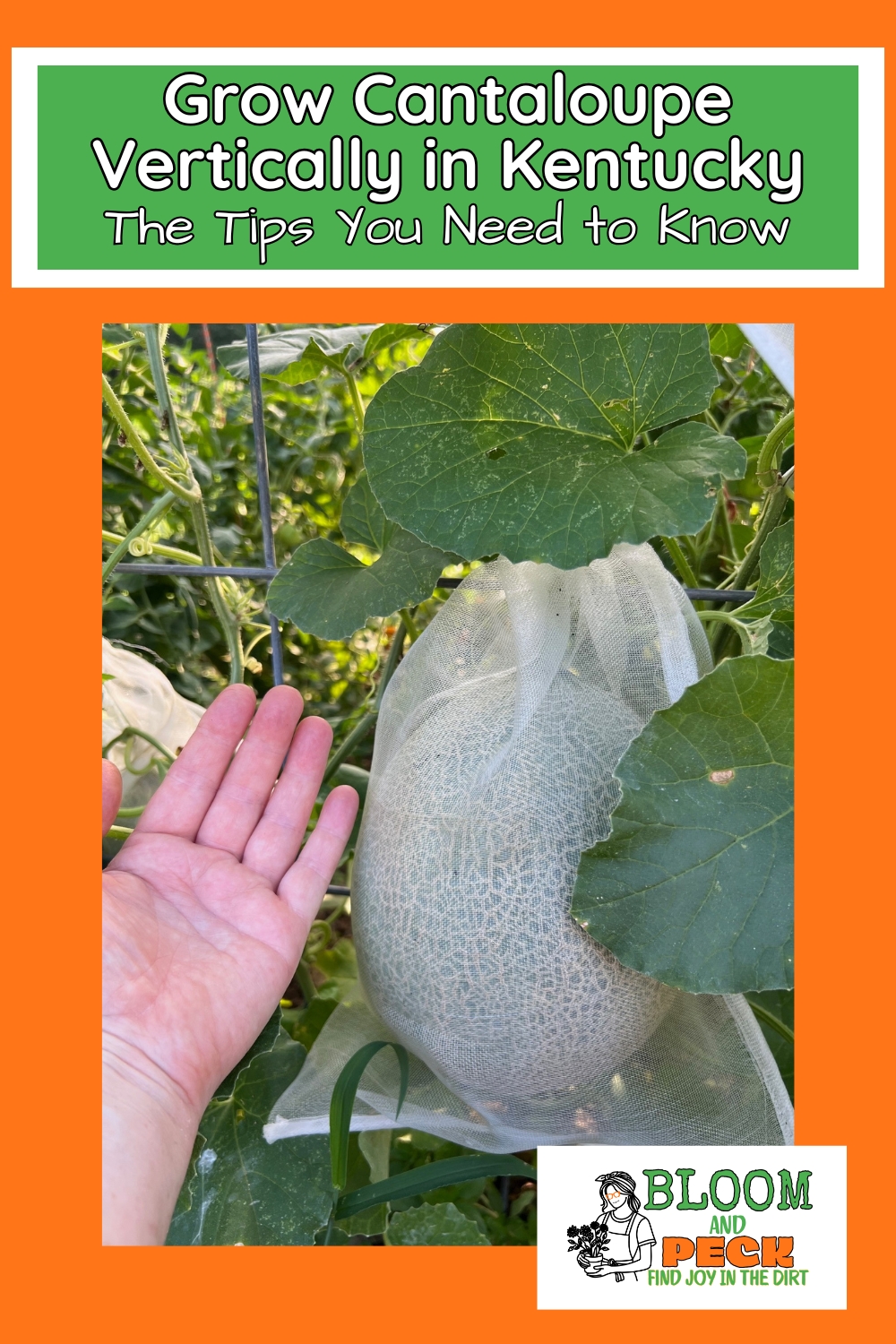

Growing cantaloupe on a trellis in Kentucky is one of the best vertical gardening decisions I’ve made in my Zone 7 garden — and I almost didn’t try it. If you’re dealing with limited space, humid summers, or just tired of playing garden yoga trying to find melons hiding under sprawling vines, this method is worth every bit of the setup.
If you’re anything like me, you’re always looking for ways to make your garden pop with flavor while keeping things fresh and fun. This summer, I decided to grow cantaloupe using a cattle panel trellis for one plant in the ground and for another in a grow bag. Let me tell you, it’s been a surprise, and I’ve got a story to share.
Quick Answer: Growing Cantaloupe in Kentucky
When to plant: Mid-May (after last frost, soil 65°F+)
Start seeds indoors: Early April (4-6 weeks before transplant)
Harvest: Late July-August (70-90 days from transplanting)
Best setup: Vertical cattle panel trellis with mesh sling support
Spacing: 12 inches apart at base of trellis
Zone: Perfect for Kentucky 6b-7a
Keep reading for my trellis setup, mesh bag trick, and pest control tips tested in my Kentucky garden! ↓
Growing Cantaloupe on a Trellis in Kentucky, 2 Ways
Vertically growing Cantaloupe is a game-changer for small spaces or anyone wanting to maximize their backyard garden’s potential. And honestly, it’s Pretty!
Whether you’re using a cattle panel trellis, as I did for my in-ground plant or an arched trellis for a grow bag setup, this method saves space, keeps fruit off the ground, and makes harvesting a breeze.
Plus, it’s just plain fun to watch those vines climb, and those melons dangle like summer jewels. Here’s how I did it, along with some tips to help you grow your own sweet cantaloupe in Kentucky.
Growing Cantaloupe on a Trellis Kentucky
Kentucky’s warm, humid summers are perfect for cantaloupe, which thrives in temperatures between 70-90°F. This year I wasn’t able to start all my seeds, since I had 2 surgeries back-to-back in the Spring. But next year I’d like to try Epic Gardenings Hearts of Gold Cantaloupe, which is short season option according to Epic. I want to have room to plant a fall section of peas after the melon grows.
This is an affiliate link that provides you with savings at no extra cost to you.

Since our growing season in Central Kentucky runs from mid-May to early September, I will start my seeds indoors in early April, about 4-6 weeks before the last frost date (around mid-April in central Kentucky).
For the in-ground plant, I prepared a sunny spot with well-drained, fertile soil amended with compost, as cantaloupes love rich, loamy soil with a pH of 6.0-6.8.

I set up the conataloupe grow bag and the in ground plant 24 inches apart at the base of their trellises, as vertical growing allows for closer planting compared to sprawling vines. → See the complete [Kentucky Vegetable Planting Calendar] for month-by-month planting dates for all crops.
Growing Cantaloupe Vertically in a Container or Grow Bag
If you don’t have in-ground space — or you’re gardening on a patio, deck, or rental property — a grow bag works surprisingly well for vertical cantaloupe in Kentucky.
I grew one plant in a 10-gallon grow bag this past summer right alongside my in-ground plant, and it produced right along with the one in the ground.
Here’s what I used:
- A 10-gallon grow bag filled with potting soil, perlite, and slow-release fertilizer

- An arched panel trellis anchored with t post (see set up below)
- The same mesh produce bags to support the fruit once it forms
The key in Kentucky’s summer heat is consistent moisture — this one did dry out faster than ground soil, especially in July. I watered more frequently once temperatures climbed and watched for wilting in the afternoon as my indicator.
I have actually grown squash in a wicking tub set up, check out Gardening with Leon on YouTube, I think it would work fantastically with growing cantaloupe in container gardens.

How to set up a Cantaloupe Trellis in Kentucky
The cattle panel trellis for my vertically growing cantaloupe is a beast—sturdy, 8 feet tall, and able to handle the weight of those heavy melons. I secured it with T-posts to keep it stable. → Learn more about [building cattle panel trellises for tomatoes) – I added one more arch and grew on one side for cantaloupe!

The arched panel trellis for the 2nd grow bag plant is a bit of a Chaos gardening style! As I put one end in the dirt and a section of rebar at the other end! Making it a low tunnel over some lovely weeds! I might post a picture of that later, after I weed under it!
Both setups are great for the Kentucky’s climate. It’s important to have good air circulation. It helps prevent fungal diseases like powdery mildew, which, take it from me, can be a Pain in our humid summers.
As the vines grew, I gently trained them up the trellises, using tomato plastic ties to guide them without damaging the stems. Once the melons started forming, I used mesh produce bags (not an affiliate I just bought them on Amazon Here) to support the fruit and prevent them from snapping off the vines.
The mesh bags are a lifesaver, especially for the larger melons on the cattle panel trellis that were starting to break the stems! The melon bags also help repel pests with those tiny mesh holes.
→ Companion planting helps! See how I use [basil with tomatoes] – marigolds work the same way for cantaloupe.
“Plant marigolds or basil nearby — I cover exactly how to do this in my Kentucky Companion Planting Guide — or use organic insecticidal soap to keep them at bay.”
Training Cantaloupe Vines and Supporting the Fruit
When you grow, you know, watching those vines climb was like watching a slow-motion superhero movie! The baby cantaloupes were adorable, but finding that big, surprise melon was the ultimate payoff. Vertical gardening not only saves space but also keeps the fruit clean and helps keep it pest-free, as it’s lifted off the ground. Plus, it’s easier to spot ripe melons when they’re hanging at eye level—no garden yoga required! After surgery, that helps with one less bend in the garden.

In Kentucky, consistent watering is key. The first week I watered deeply, letting the top inch of soil dry out between waterings. But July had other plans for my watering routine.
The rest of July poured in normal Kentucky style. So I kept up the row cover mesh cloth over the arch to keep them from being beaten down and from sunscald. I also kept an eye out for pests like cucumber beetles and striped armyworms.
They can be managed using organic methods:
How to Know When a Cantaloupe is Ripe (Kentucky Timing)
How do you know when a cantaloupe is ready? Look for a medium green rind under the netting, a sweet aroma, and a slight crack where the stem meets the fruit. If it slips off the vine with a gentle tug, it’s go time.

Is Vertical Cantaloupe Worth It in Kentucky?
Growing cantaloupe vertically in my Kentucky backyard garden has been a delicious adventure, full of surprises and sweet rewards. Whether you’re working with a small patio or a sprawling garden, trellising cantaloupe is a fun, space-saving way to enjoy homegrown melons.
So grab a trellis, Instagram worthy or not, the vines will love it. Plant some Epic Gardening seeds, and get ready to be swept away by your own backyard bounty.
💌 Want more Kentucky garden how-tos like this?
FAQ: Growing Cantaloupe Vertically
Start seeds indoors in early to mid-April and transplant or direct sow after the last frost, around mid-May, when soil temps hit 65°F or higher
YES! While I used a grow bag this time, I have also grown squash in containers. Use a big salt lick tub container. (Look up Gardening with Leon on Youtube). It would work great with a dwarf variety and a sturdy trellis. Keep soil moist but not waterlogged.
I purchased those amazing mesh bags from Amazon, but you can use Old onion or fruit mesh bags, pantyhose, or an old t-shirt or jeans to create a sling.
Cucumber beetles, Asian beetles, Armyworms, and aphids can be an issue. Plant marigolds or basil nearby, or use organic insecticidal soap to keep them at bay. This was the main reason I used the mesh bags to protect the fruit in combination with the organic insecticidal soap and companion planting.
Look for a medium green rind, sweet smell, and a slight crack at the stem. It should slip off easily.
Actually, no, they don’t. If you have room to let them sprawl out, go for it! But if you have a small garden, growing vertically is a fantastic option.
Yes! Kentucky’s warm, humid summers (70-90°F) are perfect for cantaloupe. Choose a sunny spot with well-drained soil, use vertical trellises to prevent fungal diseases, and harvest before first frost in late September-early October.
Most cantaloupe varieties take 70-90 days from transplanting to harvest in Kentucky. Planted in mid-May, expect ripe melons in late July through August. Short-season varieties like Hearts of Gold mature faster (70 days).
Citations:
This post contains affiliate links. If you purchase through links, like the one for How to grow Cantaloupe in Kentucky with Epic Gardening Seeds, we may earn a small commission at no extra cost to you. Thank you for supporting Bloom and Peck!
- Home Vegetable Gardening in Kentucky
- How to Grow Cantaloupe Vertically
- Cantaloupe Honey Rock – Burpee
- Kentucky Produce Availability Guide
- Growing Cantaloupe in Containers
- Specialty Melons – University of Kentucky
- How to Grow Cantaloupes – Almanac
- How to Grow Cantaloupe on a Trellis
- How to Plant, Grow, and Care for Cantaloupe
Leave a Reply