
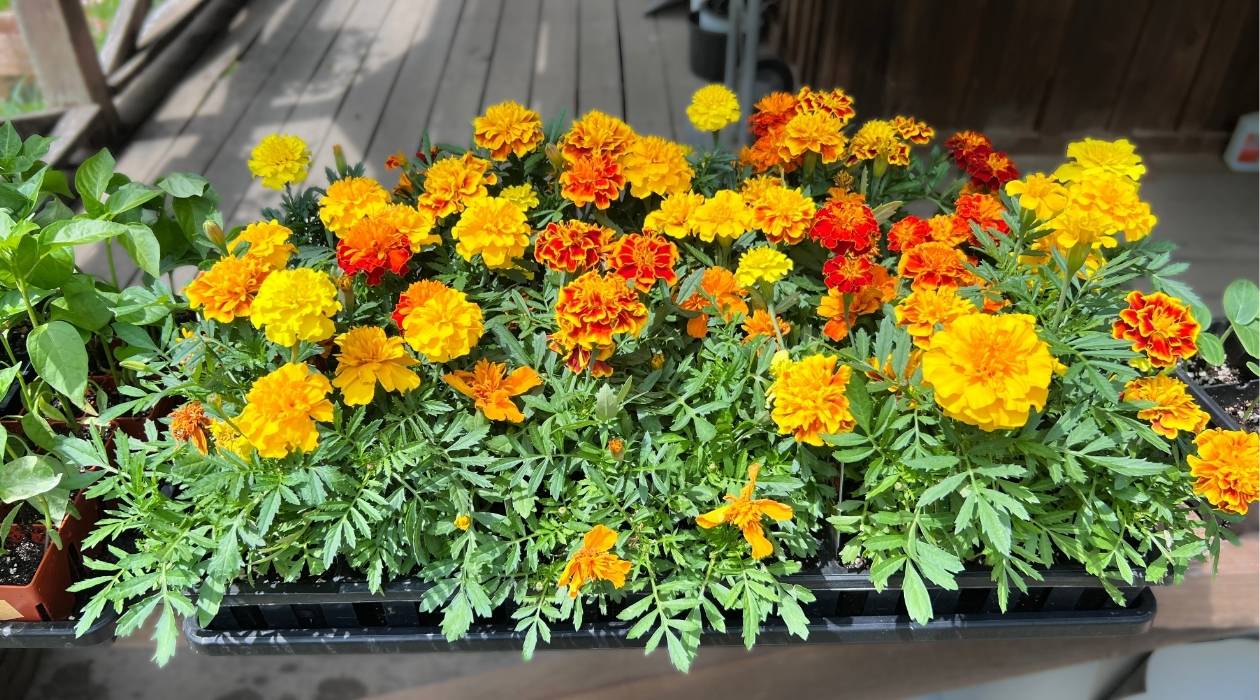
Hello Kentucky gardener, are you searching for information on companion planting with marigolds in Kentucky? You found the right place I love to use marigolds in my companion planting!
(This has been updated April 2026) it is part of the Companion Planting Series.
t’s May 16, 2025, and I’m 23 days post-surgery, sticking to my 10lb limit and no-bending rule with my raised bed gardening setup and short stool. Today, marigolds are the star—what are the myths, what can and cannot be planted with them and what are the truths?

Some links in this post may be affiliate links, meaning I earn a small commission at no extra cost to you—thanks for supporting my homestead dreams!
Why Marigolds? A Powerhouse for Companion Planting
Some links in this post may be affiliate links, meaning I earn a small commission at no extra cost to you—thanks for supporting my homestead dreams! Now, let’s dig into the magic of marigolds together!
Marigolds are more than just a pretty face in the garden—they’re a powerhouse for vegetable garden companions. Epic Gardening notes that marigolds thrive in full sun, heat, and well-draining soil, making them ideal for Zone 7 gardening. They are thriving alongside plants my tomatoes, cucumbers, peppers, and in an herb container garden too.

Some of Marigold’s super power is attracting pollinators like bees, boosting fruit set. Their strong scent offers natural pest control by repelling tomato hornworms, root-knot nematodes, and aphids, as highlighted by Just Agriculture. Tomato Bible adds that marigolds act as a trap crop for slugs and snails, protecting nearby veggies.
The Cultural Legacy of Marigolds
🌼In researching marigolds as companion plants I found this interesting background story that weaves charm into their garden role, with a name rooted in history.
National Geographic tells us that their name “marigold” comes from “Mary’s gold,” linked to the Virgin Mary, as they were once offered in her honor, adding a touch of timeless beauty.
This legacy shines across cultures— in Mexico, they’re cherished during Day of the Dead, where their bright colors and resilience symbolize life and renewal, guiding spirits with their vibrant petals, like nature’s little storytellers.

In India, marigolds dazzle in weddings and festivals, strung into garlands to bring prosperity and joy, their golden hues lighting up celebrations.

This history brings even more meaning to my little garden as I prep my Marigolds on the porch, hardening off in the sunshine, imagining the color and “gold” they’ll bring to my garden once planted!
Companion Planting with Marigolds in my Kentucky Garden
Updated May 2026
🌼 I’m excited to interplant these marigolds with my Tomatoes (Cherokee Purple and Roma on DIY trellises) and other veggies like peppers, cucumbers and squash. In my 12″ raised beds, I’ll space them 12-18 inches apart (maybe hehe), as Gardener Bible recommends, to maximize my kitchen garden’s potential.
Interplanting did a few great things for my tomatoes, broccoli and garden, the chart below gives you more updates.
Marigold Companion Planting: Crop-by-Crop Breakdown
I’ve been testing marigold companion planting in my Zone 7a Kentucky garden, and here’s what actually works with the crops I grow. This chart combines recommendations from Epic Gardening with my own results from planting marigolds alongside vegetables in Kentucky clay soil.
| Plant with Marigolds | Why It Works | My Kentucky Experience | Spacing |
|---|---|---|---|
| Tomatoes | Deters aphids, whiteflies, and hornworms. Attracts pollinators for better fruit set. | I plant 2-3 French marigolds around each tomato plant in my raised beds. Fewer aphids on my German Pink tomatoes when marigolds are present. | Plant marigolds 8-12″ from tomato base |
| Peppers | Repels aphids and reduces beetle damage. Helps attract pollinators for pepper flowers. | Planted at the base of my jalapeños and cayenne peppers in 2025. Peppers produced well with minimal pest issues. | 2-3 marigolds per pepper plant |
| Cucumbers | May deter cucumber beetles and aphids. Attracts pollinators for cucumber flowers. | Planted along my cucumber trellis edges. Still got some beetles but seemed like fewer than without marigolds. | Border planting along trellis base |
| Squash & Zucchini | May deter squash bugs, beetles, and aphids. Good for attracting pollinators. | Border planted around squash beds. Results mixed—still got squash vine borers but potentially fewer overall bugs. | 12-18″ from squash plants |
| Bush Beans | Deters Mexican bean beetles. Beans fix nitrogen; marigolds don’t compete for nutrients. | Works great with bush beans. Important: keep marigolds AWAY from pole beans—they’ll shade out the marigolds! | Plant between rows, 8-10″ apart |
| Lettuce & Greens | Deters slugs and beetles. Marigolds provide light afternoon shade in hot months. | Planted marigolds on the south/west side of lettuce for afternoon shade. Helped extend my spring lettuce harvest. | Plant on sunny side, 10-12″ spacing |
| Basil | Both deter pests. Marigolds help keep slugs away from basil in wet weather. | Great pairing! Both love heat and full sun. Plant them together in containers or garden edges. | 6-8″ spacing works well |
| Herbs (Thyme, Oregano, Parsley) | Mutual pest deterrence. Both attract beneficial insects and pollinators. | Works beautifully in raised beds or garden edges. Creates a pollinator-friendly herb/flower border. | 6-8″ spacing |
| Potatoes | Deters Colorado potato beetles. Marigold roots release compounds that deter root-knot nematodes. | Haven’t tried this combo yet in my Kentucky garden—on my 2026 list to test! | Plant on south side to avoid shading |
| Broccoli & Brassicas | Deters cabbage moths, beetles, and caterpillars. Low nutrient competition. | Use caution—marigolds can attract slugs. Give some space between marigolds and brassicas (12+ inches). | 12-18″ spacing minimum |
| Peas | Peas fix nitrogen; marigolds have low nutrient needs. Both attract pollinators. | Good spring combo. Marigolds bloom as peas finish, extending the pollinator season in that bed. | Plant at row ends, 8-10″ spacing |
All the Veggie Planting Dates in One Place
Companion planting with marigolds is just one piece of a successful Kentucky garden. Get my FREE Kentucky Vegetable Planting Calendar with month-by-month planting dates for 30+ vegetables—perfect for planning your whole season alongside your marigolds.
My Favorite Marigold Seeds from Epic Gardening
After this year’s lesson about fresh seeds vs. old seeds (my jalapeño failure!), I’m sticking with reliable seed sources. You can find quality marigold and vegetable seeds at Epic Gardening—I’ve had great germination rates with their French marigold varieties.


Source: Companion planting information adapted from Epic Gardening’s Marigold Companion Plants guide, combined with my Zone 7a Kentucky garden experience.
What NOT to Plant with Marigolds
Avoid these combinations in your Kentucky garden:
- ❌ **Pole Beans** — They climb over marigolds and shade them out. Marigolds need full sun to bloom and deter pests effectively. As a result, my Kentucky Wonder beans smothered my marigolds in 2025.
- ❌ **Cabbage Family (very close)** — Broccoli, cabbage, cauliflower planted RIGHT next to marigolds can be problematic. They say Marigolds can attract slugs, they then move to your brassicas. Keep some space between them.
- ❌ **Fennel** — Fennel inhibits growth of most plants, including marigolds. Keep them separate.
- ❌ **Other Marigolds (too close)** — Overcrowding marigolds reduces air circulation and can lead to powdery mildew in Kentucky’s humid summers. Space French marigolds 8-10″ apart.
- **What works fine:** Bush beans, tomatoes, peppers, squash, cucumbers, potatoes, lettuce (with spacing).
Quick Reference: Best Marigold Companions
Plant marigolds with: Tomatoes (deters aphids and hornworms), peppers (repels aphids and beetles), cucumbers (attracts pollinators), squash (may deter squash bugs), bush beans (deters Mexican bean beetles), lettuce (deters slugs), basil and herbs (mutual pest control), potatoes (deters Colorado potato beetles), broccoli (deters cabbage moths).
Avoid planting marigolds with: Pole beans (they’ll shade out marigolds), cabbage family planted too close (marigolds attract slugs that move to brassicas), other marigolds crowded together (causes powdery mildew).
Marigold Companion Planting Myths vs. Reality
After growing marigolds in my Kentucky garden for years, here’s what’s actually true:
MYTH: Marigolds eliminate all pests ❌ REALITY: They deter some pests (aphids, whiteflies, some beetles), but they aren’t a magic cure. In fact, I still get squash bugs even with marigolds around my squash. Ultimately, they’re one tool, not a complete solution.
MYTH: All marigolds work the same for pest control ❌ REALITY: French marigolds (Tagetes patula) are best for pest deterrence because of their strong scent. African marigolds, on the other hand, are too tall for most companion planting. Signet marigolds, meanwhile, are great but less effective for pest control.
MYTH: Marigolds repel rabbits and deer ❌ REALITY: In my experience, rabbits don’t care about marigolds. Deer do avoid them; however, they’re not a deer fence. Instead, they’ll just eat around the marigolds and get to your vegetables anyway.
MYTH: You have to plant tons of marigolds to see any benefit ❌ REALITY: Even 2-3 marigolds around each tomato plant make a difference. Of course, more is better, but you don’t need solid borders of marigolds to get pest deterrence.
WHAT ACTUALLY WORKS: In short, marigolds work best as part of a diverse garden with good practices—for example, crop rotation, healthy soil, hand-picking pests, and yes, some marigolds mixed in.
Why use Marigolds for Organic Gardening in Kentucky?
Their pest control should reduce my need for sprays, aligning with my sustainable companion planting goals. With chickens pecking nearby, it’s a homestead-friendly plan.
Frequently Asked Questions About Marigold Companion Planting
Yes! AIGardenPlanner suggests marigolds pair wonderfully with beans, repelling bean beetles and enhancing soil health with their roots, as noted by Just Agriculture. I plan to interplant them in my raised beds once the rain breaks.
Absolutely! Marigolds deter squash bugs and improve soil, according to AIGardenPlanner. I’m excited to try this in my kitchen garden, spacing them 12-18 inches apart to give my squash room to spread
They do! Epic Gardening mentions marigolds can protect cucumbers from pests like aphids. I’ll test this combo next to my tomatoes (first before my cucumber seeds spring up), keeping the magic of pest control in mind.
Gardener Bible recommends 12-18 inches to avoid competition, which works for my adaptive setup. This spacing ensures my Marigolds support without crowding my veggies.
Let’s Grow Together – Share Your Tips!
🌼 Share your starting tips on Instagram or Facebook @bloomandpeck—I’d love to hear how you’re finding joy in the dirt!
Resources
- Epic Gardening Can you plant tomatoes with marigolds
- Burpee
- Mississippi Greens
- Just Agriculture
- AIGardenPlanner
- National Geographic
Leave a Reply