
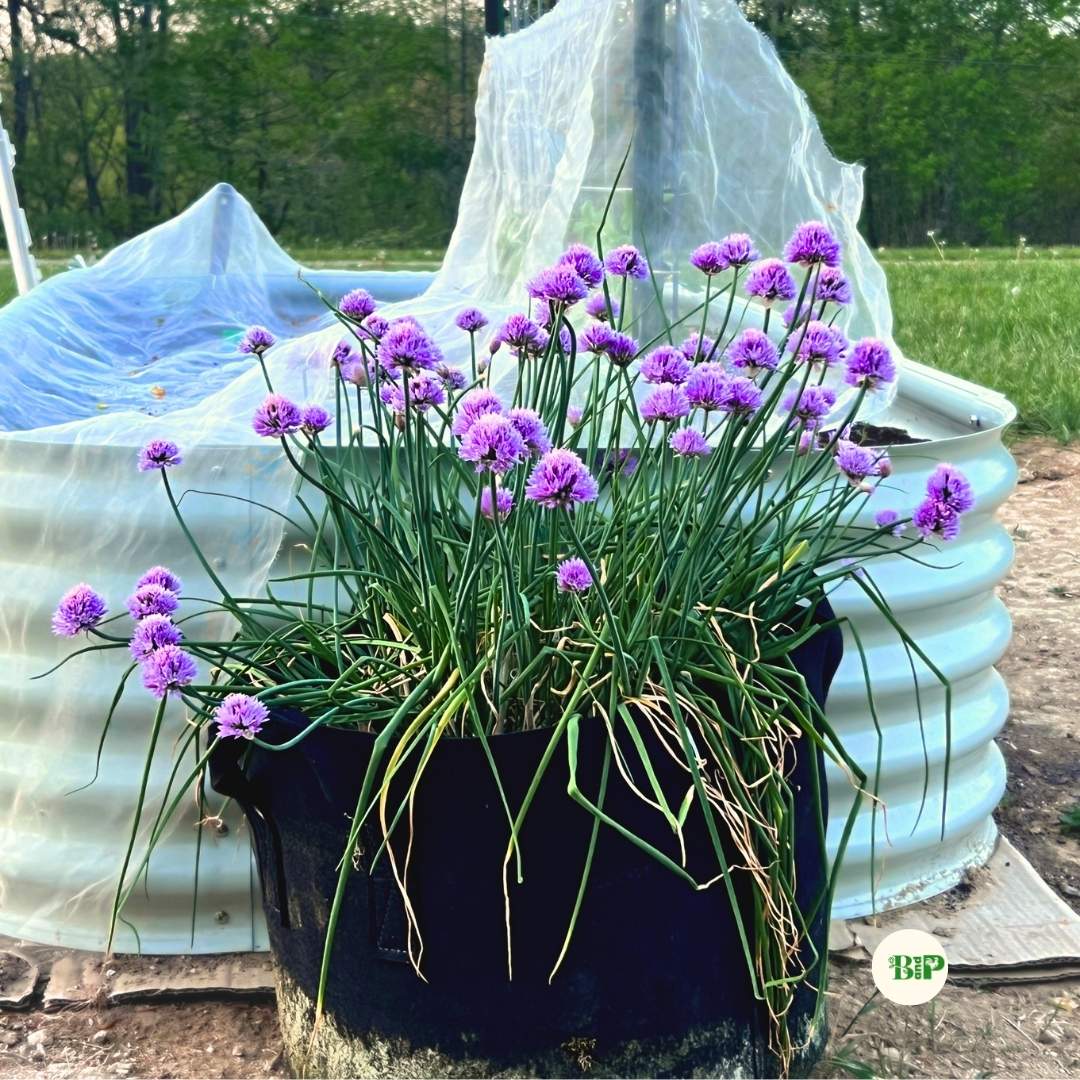
If you’ve been reading this blog a while, you’ve seen the photo. Chives in a grow bag in Kentucky, April sunlight, ridgetop backdrop — it’s been sitting right there in my April planting post header being beautiful and a personal inspiration to expand gardening in grow bags in Kentucky.
The experiments. The drooping vines at 3pm. The afternoon in my second summer when I walked out and realized I had been watering my grow bag cantaloupe like it was in the ground — and it very much was not.
I’ve grown seven crops in grow bags now, including a side-by-side cantaloupe experiment that genuinely surprised me, and I’ve made enough mistakes to actually be useful to you. If you’re a Kentucky gardener thinking about grow bags — whether you’ve got clay soil that won’t behave, a patio situation, or you just want to try something new — here’s what two real seasons on a Kentucky ridgetop taught me.
Some of the links in this post are affiliate links. This means if you click and buy, I get a small commission at no extra cost to you. I only recommend things I use.
Why Grow Bags Work Differently in Kentucky
Most grow bag content online is written by people gardening in mild climates. Kentucky is not that. We have heavy clay in a lot of the state, wild spring temperature swings, and summers that go from lovely to punishing faster than you’d believe if you didn’t live here.
That combination is exactly why grow bags can be a genuinely good tool for Kentucky gardeners — and why they need a different approach than the generic Pinterest advice gives you.
The clay problem first. If your in-ground soil compacts, drains poorly after rain, or stays waterlogged into May, a grow bag sidesteps all of it. You build your own soil in a container with drainage already figured out. The University of Kentucky Cooperative Extension recommends a mix of
1 part composted garden soil
1 part sphagnum peat moss
and 1 part perlite
for container growing — and that formula works. The drainage is consistent in a way Kentucky clay simply isn’t.
Now the problem nobody talks about in a grow bag article is: fabric grow bags lose water faster than you think. A lot faster. The fabric breathes — that’s the whole point, it’s what makes air pruning work — but it also means moisture escapes through the sides as well as the bottom. In a Kentucky July, a bag sitting in full afternoon sun is working against you in a way it wouldn’t in a milder climate.
My first summer, I watered my grow bag plants on the same schedule as my in-ground beds. By August I was losing plants. UK Extension says it plainly in their container gardening guide: daily watering may be necessary. I thought that was for people growing on concrete balconies. I was wrong.
The fix was two things: water more, and mulch the tops of the bags. I’ll come back to both in detail.
The Products I Actually Use
Before I get into the crops, let me tell you what’s in my grow bag setup — because the equipment genuinely matters here in a way it might not in a cooler climate.
For heat and moisture: I switched to lined grow bags for anything going through a full Kentucky summer, and it made a real difference. The Epic Lined Grow Bags (5% off — with this link) have a liner that helps retain moisture inside the bag while still allowing drainage at the bottom and air pruning at the roots. They’re UV-treated, which matters when a bag sits in Kentucky sun from May through September.
I am not going to just get rid of my unlined bags. I use unlined bags for shade, spring and fall crops, lined for anything going through July and August.
For the soil surface: This one I discovered out of during my cantaloupe experiment, and it’s become something I’d like to add to my garden and give it a try. Epic Grow Bag Covers sit on top of the soil in the bag and dramatically slow evaporation from the surface — which, as I’ll explain below, is where a lot of the water loss happens in summer. They come in multiple hole configurations depending on how many plants you’re running per bag. For a single tomato or cantaloupe plant, the 1-hole cover is exactly right. I wish I’d had these in my first season. Since I don’t have these yet I know now to mulch!
For going deeper: If you want to really understand the method — trellis systems, soil mixes, succession planting in bags — Kevin Espiritu’s Grow Bag Gardening book is the most thorough resource I’ve found. It’s the one I went back to after my cantaloupe experiment when I wanted to understand what was actually happening with moisture and root development.
What to Fill Your Grow Bags With, When Not Buying Potting Soil
Keep it simple. UK Extension’s recommended container soil mix:
- 1 part compost
- 1 part sphagnum peat moss (Canadian)
- 1 part perlite
- ½ cup dolomitic limestone per bushel
- ¼ cup superphosphate per bushel
I mix this by wheelbarrow, not by lab. The ratio matters more than precision. The perlite is not optional — skip it and you end up with a dense, poorly-draining bag that defeats the whole point of not growing in clay.
Mulch on top, always. After planting, add a 2-inch layer of shredded leaves or straw on top of the bag soil. This slows surface evaporation, keeps the root zone cooler on hot afternoons, and reduces how often you need to water. I figured this out the hard way mid-cantaloupe-experiment, and I now do it for every bag from day one. Alternatively — and this is what I’ve started doing for my summer bags — use a grow bag cover (see above) for the same effect with a cleaner look.
Another option is getting raised bed soil from the store. Many brands make them now. I am a fan of the PRO-MIX, though this particular one would need “amendments” because it is just a great mix that allows airflow and drainage . I am not an affiliate, I just really like how this product works in my raised bed and grow bags. They have other mixes as well.

Sizing: Get This Right Before You Plant
The single most common mistake is using a bag that’s too small. A plant in an undersized bag dries out twice as fast and produces half as much.
| Crop | Minimum Bag Size |
|---|---|
| Herbs, chives, lettuce, radishes | 3–5 gallon |
| Beets, carrots, spinach, greens | 5–7 gallon |
| Peppers, eggplant, broccoli | 7–10 gallon |
| Tomatoes | 10–15 gallon |
| Potatoes | 10 gallon minimum |
| Cantaloupe on a trellis | 10–15 gallon |
UK Extension confirms that container size should match the plant’s root requirements — a 5-gallon container works for compact crops, while tomatoes, potatoes, and vining crops need 8 gallons or more. Going too small is the fastest way to a stressed plant that needs water constantly and never fully thrives.
7 Crops I’ve Actually Grown in Kentucky Grow Bags
These are not theoretical recommendations based on something I read. These are crops I grew on this ridgetop, in this zone, through real Kentucky seasons.
1. Potatoes
Potatoes might be the single best argument for grow bags in Kentucky, and here’s why: harvest day. Instead of digging through clay soil hoping you found everything, you just dump the bag onto a tarp. You pick up every single potato. Nothing left behind, nothing nicked with a shovel.
I grew Kennebec potatoes in a 10-gallon bag . The yield is not as great as in ground, but that may have been my first time mistake and not amending and watering enough.
Overall, the process is simple — plant seed potatoes in the bottom third of the bag, then add soil as vines grow, same as hilling in the ground, except the bag makes it easy. Kentucky’s spring potato window is generous (central Kentucky growers can get them in by mid-March), and grow bags warm up faster than clay soil, which gives you a small but real head start.
The one thing: potatoes need consistent moisture for tuber development. This is non-negotiable. See the watering section below.

2. Cantaloupe on a Trellis — The Experiment That Taught Me Everything
Last season I ran a side-by-side test: one cantaloupe plant in a 10-gallon grow bag on a trellis, one cantaloupe plant in the ground on the same trellis. Same variety. Same sun. Same training — both vines needed redirecting for a few weeks before they got the idea, but both climbed well once they did.
Here’s what actually happened:
The grow bag plant showed baby cantaloupe first. I noticed fruit set earlier on the bag plant. The warmer soil in the bag likely accelerated early growth.
The in-ground plant made bigger fruit. By harvest, the in-ground cantaloupe were noticeably larger. I’m confident this comes down to water. The bag plant was working harder to stay hydrated in the heat, and no matter how often I watered, it didn’t have the same deep moisture access as the in-ground plant.
The bag plant drooped first. Every single time. On hot afternoons, the grow bag cantaloupe showed drought stress — slight wilting — before the in-ground plant did. Every time. That became my signal: when the bag plant drooped first, it meant I needed to water now, not tomorrow morning.
What I did about it: I mounded shredded leaf mulch around the outside base of the bag to insulate it from reflected ground heat, and added a layer across the top of the soil inside the bag. That combination cut down how quickly it dried out. This is where I wish I’d had grow bag covers from the start — same effect, less mess, and a cleaner look.
Would I do the experiment again? Yes. The trellis system worked great for both plants. The grow bag fruit was genuinely good. And I learned more about container watering in a Kentucky summer from that one cantaloupe plant than from anything I’ve ever read.
→ When to Plant Cantaloupe in Kentucky — What I Learned on My Ridgetop]

Not Sure When to Plant Vegetables in Kentucky?
My free Kentucky planting calendar shows you exactly when to plant tomatoes, broccoli, beets, and more — based on Kentucky zone timing, not generic advice.
Adair County tested. No spam, ever.
3. Peppers
Peppers are one of the best container crops there is, and Kentucky’s heat is actually an advantage here — they love it. I use 7-gallon bags for most varieties. UK Extension recommends ½ to 4-gallon containers for peppers, but I find 7 gallons gives them room to produce without stress through a full summer.
The key is consistent water from flowering through harvest. Let peppers dry out during fruit set and you get blossom drop. Kentucky summers will absolutely test you on this.
If you’re starting peppers from seed, Epic Gardening’s Container Collection Seed Bundle is curated specifically for small-space and container growers — compact varieties that produce well without outgrowing a bag. Worth a look if you’re building out a grow bag garden from scratch this season.
When to Plant Peppers in Kentucky — >
4. Tomatoes
Yes, grow bags work for tomatoes in Kentucky. Yes, they need more water than you’d expect. UK Extension recommends 1 plant per 4–5 gallon container as a minimum — I’d push that to 10–15 gallons for anything meant to produce through summer. Compact or determinate varieties are your best friends; they won’t outgrow the bag the way an indeterminate will sprawl.
Two things make or break tomatoes in bags here: consistent moisture from flowering through harvest (uneven watering = blossom end rot and fruit crack), and protecting the root zone from afternoon heat. The 1-hole grow bag cover is made for exactly this situation.
→ Best Tomatoes to Grow in Kentucky — Zone 6 & 7
5. Lettuce and Greens
Lettuce is the easiest grow bag crop on this list and the one I’d start with if you’ve never done this before. Small bags (3–5 gallon), partial shade tolerance, fast harvest. Kentucky’s spring and fall windows are ideal — you can start bags on the porch in March, move them to shadier spots when summer heat arrives, and come back to them in September.
I grew a mix of leaf lettuce varieties in a couple bags through April and May, cut-and-came-again for weeks. That’s a lot of salad for very little effort and zero clay soil to fight.
6. Beets
Beets work well in grow bags but they need depth more than width. A 7-gallon bag with good depth will serve you better than a shallow wide one. UK Extension recommends spacing 2–3 inches apart — thin them early and eat the thinnings as greens. Nothing wasted.
→ When to Plant Beets in Kentucky
7. Herbs — Where This All Started
Those chives in the header photo. That’s grow bag gardening for me on this homestead, and herbs remain some of the most rewarding things to grow in bags. A cluster of 3–5 gallon bags or a long planter bag gives you more chives, basil, thyme, and summer savory than a small family can realistically use.
Herbs are also the most forgiving grow bag crop — many actually prefer slightly drier conditions than vegetables. The exception is basil, which will wilt dramatically in a Kentucky July. Give it consistent water and mulch or cover that bag.


8. Garlic — Will Be Testing 2026
If you haven’t seen Bobbetsgarlic.com in Kentucky, she grows and sells fantastic garlic. So this year I will be testing growing garlic in grow bags with her amazing garlic. More to come! But I am sure it will be a fantastic trial!
The Real Lesson: Watering and Mulching in a Kentucky Summer
Let me be direct about this because every grow bag article I’ve read glosses over it.
Grow bags in Kentucky require more water than you think, more often than you think, and your plants will show stress earlier than you expect.
My cantaloupe experiment made this concrete. The bag plant drooped first on every hot afternoon, while the in-ground plant held steady. That visual taught me the bag was losing moisture through the fabric walls, through surface evaporation, and through the plant’s own transpiration all at once — while the in-ground plant had deep soil moisture to fall back on.
UK Extension’s container guide says daily watering may be necessary for container vegetables in full sun. That is not an exaggeration. Not in Kentucky July.
What actually works:
Check bags daily in summer, not every other day. Water when the top inch of soil is dry — in July and August, that may be every day for heat-sensitive crops.
Mulch the top of every bag from planting day, not after you notice a problem. Shredded leaves, straw, or a grow bag cover all work. The goal is insulating that soil surface from direct sun and slowing evaporation. I also mounded mulch around the outside base of my cantaloupe bag after I noticed it drooping — that outside insulation layer made a noticeable difference in how quickly the bag reheated after morning watering.
Watch for afternoon drooping as an early signal, not a crisis. A plant that droops at 3pm on a 95-degree day may just be hot — water it and check again at dusk. A plant that droops in the morning is genuinely water-stressed and needs attention now.
For days when daily watering isn’t realistic: The Epic Lined Grow Bags were designed for exactly this situation. The liner holds moisture inside the bag rather than letting it escape through the sides in heat, and in warmer climates can meaningfully extend the time between waterings.
Kentucky Gardener Just Starting Out?
Start with two or three bags, not twenty. The watering rhythm is the thing you have to learn, and you learn it faster with a small number of bags you pay close attention to. A patio full of bags in your first summer is a recipe for losing half of them in August.
Start with something forgiving. Herbs, lettuce, or potatoes before tomatoes or cantaloupe. Get a feel for how the bags dry out in Kentucky heat before you bet your summer crop on a container method you haven’t used yet.
Get the soil mix right from the start. Perlite is not optional. Drainage matters more in a bag than anywhere else, and a dense soggy bag is worse than clay.
Mulch or cover from day one. Don’t wait until you notice the bag drying out faster than expected. Put the mulch on when you plant.
Water more than you think you need to. Err toward more. In July and August on a Kentucky ridgetop, more is almost always right.
The bags aren’t replacing my in-ground beds. But they’ve earned a permanent spot in how I grow here. For my small space porch garden they are amazing to have right by the front door for easy access.
If you try grow bag gardening this year, I’d love to hear how it goes. Leave a comment below or find me on Instagram [@bloomandpeck] — especially if you run your own side-by-side experiment. I want to see the data.
FAQ: Gardening in Grow Bags in Kentucky
They dry out faster than in-ground beds — in Kentucky July and August, daily or even twice-daily watering may be necessary. Nutrients also wash out more quickly after heavy spring rains, which Kentucky gets a lot of. The fix is mulching the soil surface, using lined bags for summer crops, and feeding with a slow-release fertilizer once plants start flowering.
In a 10-gallon grow bag — the minimum I’d recommend — you can grow 3 to 4 seed potatoes and you will get smaller potatoes, I like to do 2-3 max. I grew Kennebec potatoes in a 10-gallon bag on my Kentucky ridgetop and was genuinely impressed with the ease of Harvest. Harvest: dump the bag onto a tarp, pick up every single potato with no digging through clay.
Kentucky springs are wet and nutrients flush out of fabric bags faster than in-ground beds. Once plants start flowering, apply a balanced water-soluble fertilizer or slow-release granules around the base of each plant. This is especially important after prolonged rain events — the same drainage that saves your roots from waterlogging also washes fertility out the bottom.
The 3-hour rule refers to checking on your garden — especially containers and grow bags — in the first three hours of the morning before the heat of the day sets in. In Kentucky’s summer heat, a grow bag that felt adequately watered at 7am can be showing drought stress by 10am. Morning checks catch problems before the afternoon heat compounds them.
Based on two seasons on my Kentucky zone 7a ridgetop: potatoes, cantaloupe on a trellis, peppers, tomatoes, lettuce, beets, and herbs. I will try garlic and carrots next. I bet peas and beans will work well too for small space gardens. Cantaloupe on a trellis was the biggest surprise — the bag plant actually set fruit first in my side-by-side test with an in-ground plant, though the in-ground plant produced larger fruit by harvest.
Three things that actually work: switch to lined grow bags for anything going through July and August, mulch the soil surface with 2 inches of shredded leaves or straw from planting day, and water daily — not every other day. I also mounded mulch around the outside base of my cantaloupe bag after I noticed it drooping first on hot afternoons. That outside layer slowed how fast the bag reheated after morning watering.
Sources: University of Kentucky Cooperative Extension, Home Vegetable Gardening in Kentucky (ID-128), Container Gardening chapter, Tables 20.7–20.10.
Leave a Reply